Confidential AI Infrastructure: GPU Attestation, Hardware Trust, and the Future of Regulated Workloads
Read More
09 Oct 2026
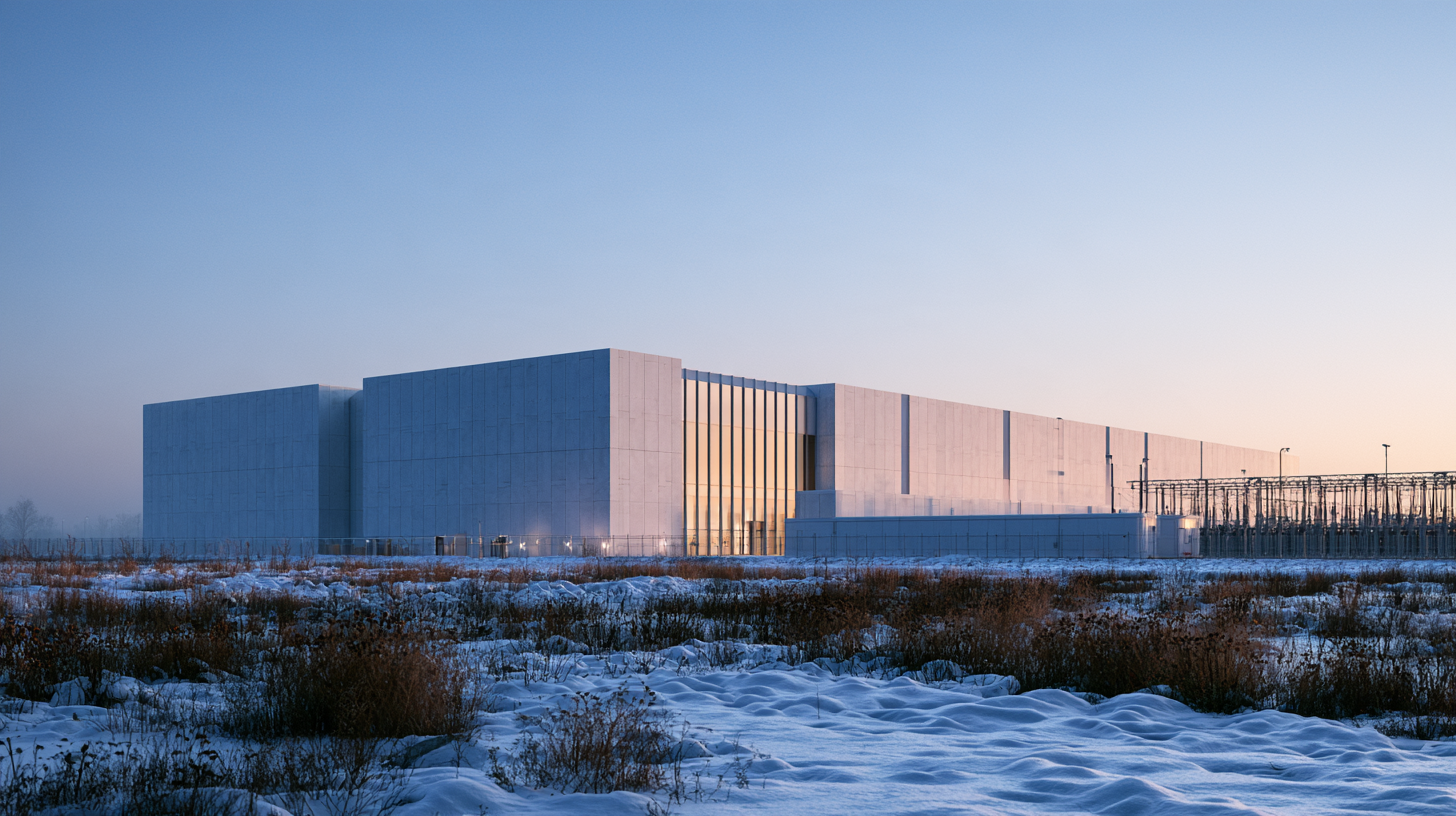
Sovereign AI compute has moved from policy language into infrastructure planning.
Canada's federal commitment of CAD $2.4B toward sovereign AI infrastructure signals a clear national priority: public institutions need domestic capacity for AI workloads that affect services, research, security, and economic competitiveness. (ISED Canada, SCIP Program Guide)
Funding changes the starting point. It gives agencies, Crown corporations, research institutions, and public-sector technology teams room to act. Yet lasting capacity depends on what happens after the allocation. GPU infrastructure becomes strategic only when power, facilities, hardware, networking, security, operations, and governance work as one system over multiple years. A one-time hardware purchase creates capacity on paper. Durable sovereign capability requires infrastructure that can absorb growing demand, support changing model architectures, meet jurisdictional requirements, and stay operational through hardware refresh cycles.
AI demand rarely scales in straight lines. A ministry may begin with document classification and call-center augmentation, then move toward large-scale retrieval systems, domain fine-tuning, and multimodal workloads. A research institution may start with training bursts, then require sustained inference capacity for public services. The post-SCIP question is practical: how sovereign AI capacity gets operated, governed, expanded, and measured after the first deployment.
Data residency remains essential. Public sector organizations need clarity on where data is stored, processed, backed up, logged, and accessed within an environment shaped by privacy law, procurement rules, and jurisdiction-specific requirements.
Infrastructure control means knowing who owns or operates the power, facilities, network, and compute environment supporting the workload. It also means understanding how capacity gets expanded, failures are handled, hardware is refreshed, and operational decisions are made.
Workload governance covers which data classes can run on which environments, how models are approved, how outputs are monitored, and how access is controlled. Governance also extends to model weights, fine-tuning data, logs, prompts, embeddings, and vector stores.
Operational visibility turns those policies into evidence. Leaders need auditability across access, utilization, incidents, performance, change management, and security controls. Visibility also supports budget governance, since GPU infrastructure becomes expensive when capacity sits idle or teams overprovision for occasional peaks.
Supply-chain resilience belongs in every sovereign AI plan.
Direct procurement of advanced GPU systems can involve long waits, with Blackwell hardware waitlists reaching 12 months in many procurement channels.
Resilience comes from committed capacity, hardware lifecycle planning, vendor qualification, and clear operating responsibilities.
Fully self-managed infrastructure may fit institutions with deep internal data center, HPC, networking, security, and GPU operations teams. Many public sector organizations need sovereign control without carrying the full burden of infrastructure operation. Managed AI infrastructure allows them to retain governance and visibility while using specialized operators for deployment, orchestration, monitoring, lifecycle management, and capacity planning.
Durable sovereign AI capacity begins with a clear demand model. Public sector leaders should forecast GPU infrastructure around four workload classes:
This workload view helps leaders decide which capacity should be dedicated and which should stay elastic. Dedicated capacity fits regulated, high-priority, latency-sensitive, or continuously used workloads. Elastic capacity fits training bursts, seasonal demand, and lower-sensitivity workloads. Stranded GPUs weaken the business case, while shortages push teams toward shadow infrastructure, fragmented vendors, or weaker governance.
Public sector leaders also need to account for density.
Legacy facilities often support 10 to 20 kW per rack, while AI-optimized environments can require 130 kW per rack or more. (CBRE, H2 2025)
That difference changes power distribution, cooling, floor loading, network design, and commissioning. Treating GPU procurement as an IT refresh creates risk when the facility layer has a different timeline.
Primary North American data center markets reached 1.4% vacancy, a record low, while wholesale colocation asking rates reached $196 per kW per month in 2025, up 6.6% year over year. (CBRE, H2 2025)
Public sector leaders planning sovereign capacity need to secure power and facility strategy early, since compute availability increasingly follows power availability.
For a deeper look at how power constraints shape AI capacity, see The Gigawatt Pipeline: Why Power Access Determines AI Infrastructure Capacity.
Public sector teams usually face three broad paths. The differences appear in deployment speed, total cost of ownership, utilization, staffing, security, governance, and dependency.
Self-built infrastructure offers direct control and can align with strict internal governance and long-term institutional ownership. It also brings the slowest delivery path in most cases.
Traditional data center construction can take 18 to 24 months, with timelines extending when power, cooling, procurement, and specialized staffing converge.
Self-built environments require internal expertise across GPU cluster design, high-performance networking, storage, orchestration, observability, hardware maintenance, security operations, and lifecycle planning. Those skills remain scarce, and a cluster running below target utilization can cost more than expected even when hardware ownership initially looks attractive.
Public cloud offers speed and breadth. It can work well for experimentation, lower-sensitivity workloads, and programs that value service variety over infrastructure control. For sovereign AI compute, tradeoffs center on jurisdiction, operational transparency, data movement, vendor dependency, and long-term economics.
Mid-sized enterprise GPU cloud spend commonly exceeds $40K per month, and public sector AI programs can scale beyond that quickly when multiple departments use shared infrastructure.
Managed AI infrastructure occupies the middle ground many public sector organizations need. It provides dedicated or reserved GPU capacity, operational support, orchestration, monitoring, lifecycle management, and governance alignment while preserving stronger control than a generic public cloud model.
Modular deployment approaches such as Infinite Compute's Rowtie architecture can support deployment windows of 8 to 12 weeks, compared with 18 to 24 months for traditional construction. For leaders working inside funding windows, policy deadlines, and urgent modernization mandates, that schedule difference changes what can be delivered within a fiscal year.

Managed AI infrastructure for the public sector should be evaluated as an operating capability rather than a capacity rental. The provider should support architecture design, deployment, monitoring, lifecycle management, workload orchestration, security control alignment, and transparent operations.
Performance begins with the physical stack. GPU clusters need dense power, efficient cooling, high-speed interconnects, and storage designed for model data. Infinite Compute supports bare metal clusters from 8 to 10,000+ GPUs, connected with InfiniBand NDR for high-performance AI workloads. Its AI-optimized infrastructure supports up to 130+ kW per rack, with a PUE below 1.2 as an industry-leading efficiency target. Those details matter because AI workloads push beyond the assumptions of legacy enterprise hosting.
Supply resilience also matters. Infinite Compute is certified in the NVIDIA Partner Network, supporting priority hardware allocation and more predictable access to advanced systems. In a market with long hardware waitlists, public sector leaders gain value from a provider that plans capacity, hardware delivery, and lifecycle refresh as part of the operating model.
Vertical integration strengthens that model. Infinite Compute owns power, facilities, and compute hardware across Canada and the United States, with a 2.5+ GW committed power pipeline across North America. Renewable energy across Canadian and US sites supports long-term infrastructure planning as AI workloads increase power demand. For sovereign programs, this integration reduces the fragmentation that appears when power, facility, colocation, hardware, network, and operations sit across separate vendors.
Security and controls need the same discipline. Infinite Compute maintains SOC 2 Type II compliance, giving public sector teams a recognized framework for evaluating operational processes. It complements an agency's governance duties and gives procurement, security, and audit teams a concrete basis for reviewing controls, evidence, responsibilities, and oversight.
For a broader overview of enterprise AI infrastructure options, see Best Managed AI Infrastructure Providers for Enterprise (2026).
Transparent operations complete the picture. Leaders need visibility into utilization, performance, incidents, maintenance, capacity headroom, access controls, and change management. Managed infrastructure should expose enough operational evidence for internal governance while reducing the need to hire and retain a full AI infrastructure operations team.
A focused roadmap can connect sovereignty requirements to implementation without turning procurement into a one-time hardware exercise:
These steps turn sovereign AI infrastructure from a capital project into an operating discipline while reducing both idle assets and sudden capacity shortages.

Post-SCIP public sector AI leadership requires more than acquiring GPUs. It requires a durable operating model that connects funding to power, facilities, hardware, security, governance, utilization, and refresh planning.
The institutions that treat sovereign compute as critical infrastructure, planned across power, facilities, operations, and governance from the start, will set the pace for public sector AI over the next decade. The funding window opened the door. The operating decisions made now will determine whether sovereign AI capacity becomes a lasting national asset or an expensive lesson in treating infrastructure as a one-time purchase.
Talk to the Infinite Compute team about managed AI infrastructure for public sector and enterprise workloads.
Disclaimer: InfiniBand is a trademark of NVIDIA Corporation.
New
New
New

.svg)


