Confidential AI Infrastructure: GPU Attestation, Hardware Trust, and the Future of Regulated Workloads
Read More
09 Oct 2026
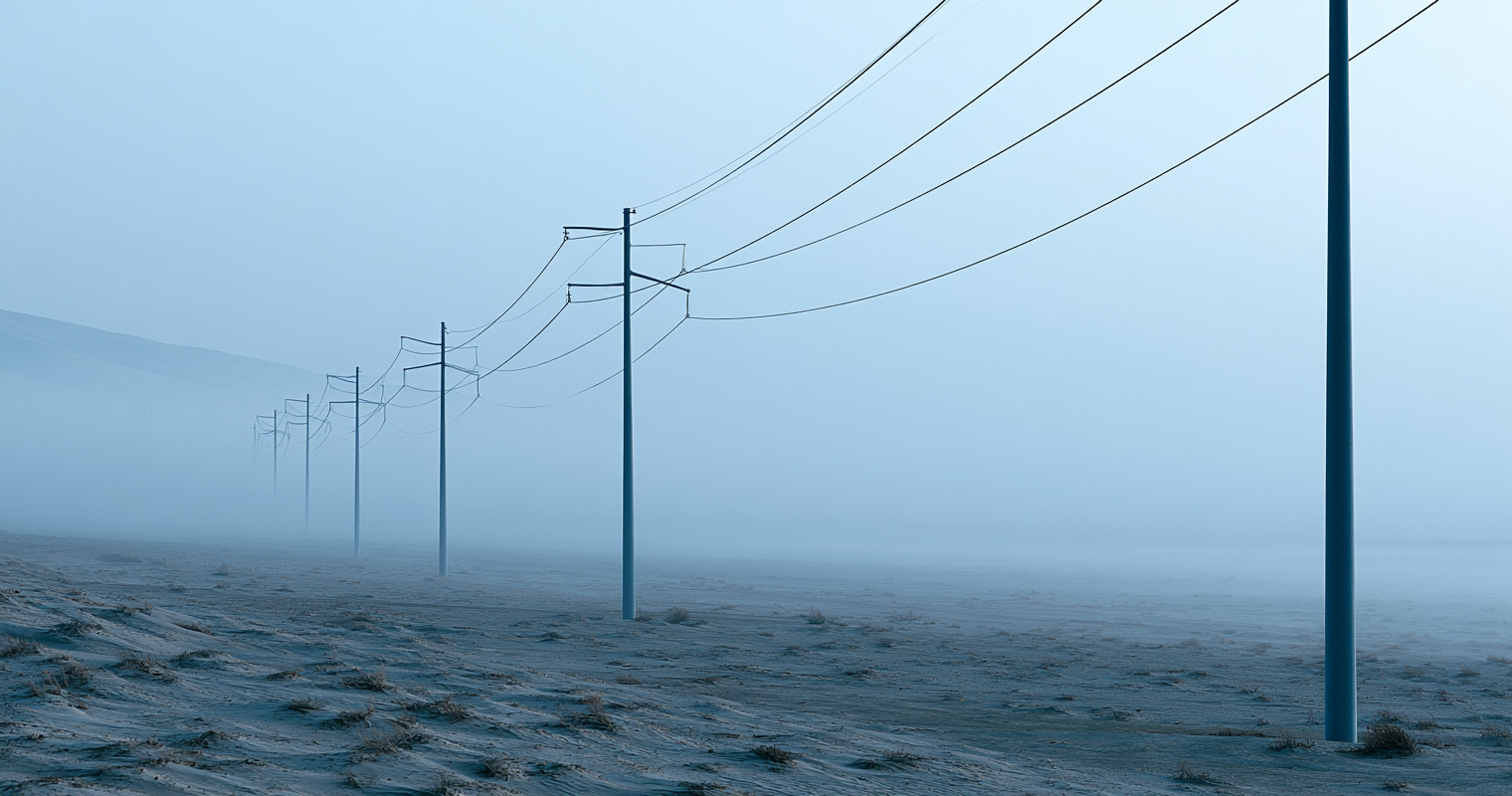
Enterprise AI infrastructure used to begin with hardware planning. Buyers asked which GPUs were available, which cluster architecture could support their models, and which deployment path would move fastest. Those questions still matter, but they now sit behind a more decisive constraint: power.

Modern AI systems consume electricity at a scale that legacy data center planning was never built to absorb. A traditional enterprise rack often operated in the 10 to 20 kW range. AI-optimized racks can exceed 130 kW. That change reshapes every assumption around site selection, cooling, electrical distribution, permitting, and operating cost.
The result is simple. AI capacity is no longer defined only by the number of GPUs a provider can procure. It is defined by how much power can be delivered to those GPUs, how quickly that power can be brought online, and whether the facility was designed for high-density AI workloads from the ground up.
That is why vertically integrated AI infrastructure has become a strategic requirement for enterprises making multi-year AI commitments. The companies that control power, land, facilities, and compute capacity have a different capacity profile than providers that must assemble those pieces after demand arrives.
GPU availability receives the most attention because it is visible to AI teams. Hardware waitlists are real. Direct procurement for advanced systems can stretch to 12 months. Large buyers have absorbed significant portions of production capacity, and enterprise teams often discover that acquiring hardware is only the first barrier.
The harder problem appears after procurement. A cluster that cannot be powered, cooled, networked, and operated at production density is stranded capacity. GPUs sitting in a constrained facility do not advance an AI roadmap.
This is why infrastructure gaps stall enterprise AI projects. Industry data shows that 81% of enterprise AI projects stall because of infrastructure gaps rather than model quality. Many organizations have the talent, the use cases, and the executive mandate. Their problem is physical capacity.
AI workloads concentrate demand in ways standard data centers were not designed to handle. Training clusters require dense power delivery and low-latency networking. Inference at enterprise scale requires sustained capacity, predictable operations, and data placement aligned with compliance requirements. Both patterns increase pressure on the grid.
The grid cannot be expanded on a software timeline. New substations, transmission upgrades, interconnection studies, and utility approvals take years. That physical reality now sits underneath every serious AI infrastructure decision.
North American data center markets are operating under severe pressure. Vacancy in primary markets has fallen to 1.4%, a record low. Wholesale colocation asking rates reached approximately $196 per kW per month in 2025, up 6.6% year over year. Those numbers reflect more than real estate demand. They reflect a shortage of powered capacity.
When enterprise buyers evaluate multi-megawatt AI sites, available square footage is the wrong starting point. The critical question is whether the site has secured power and a clear path to energization. Many facilities can market expansion plans. Fewer can show credible power access at the densities AI requires.
Utility interconnection queues have become one of the defining bottlenecks in the market. A project may secure land and financing, then wait through studies, grid impact assessments, permitting processes, equipment lead times, and utility construction schedules. Each step depends on external parties. Each step can shift by months or years.
This matters because AI infrastructure demand is moving faster than utility planning cycles. Enterprises are building AI roadmaps on annual planning horizons. Power infrastructure moves through multi-year development windows. The mismatch creates risk for organizations that assume capacity will be available when their models, data pipelines, and applications are ready.
A signed intent to build does not equal usable capacity. A site plan does not equal an energized cluster. A power request does not equal deliverable megawatts. The difference between planned capacity and controlled capacity is becoming one of the most important distinctions in enterprise AI procurement.
Securing gigawatt-scale power is not a procurement exercise. It requires land assembly, grid studies, utility coordination, environmental review, permitting, capital planning, transmission analysis, and long-term operating discipline.
The land must be suitable for industrial-scale electrical infrastructure. The site must support data center construction, cooling systems, fiber routes, physical security, and expansion. The grid connection must be technically feasible. The utility relationship must be strong enough to support planning at scale. Local stakeholders must understand the economic and energy implications of the project.
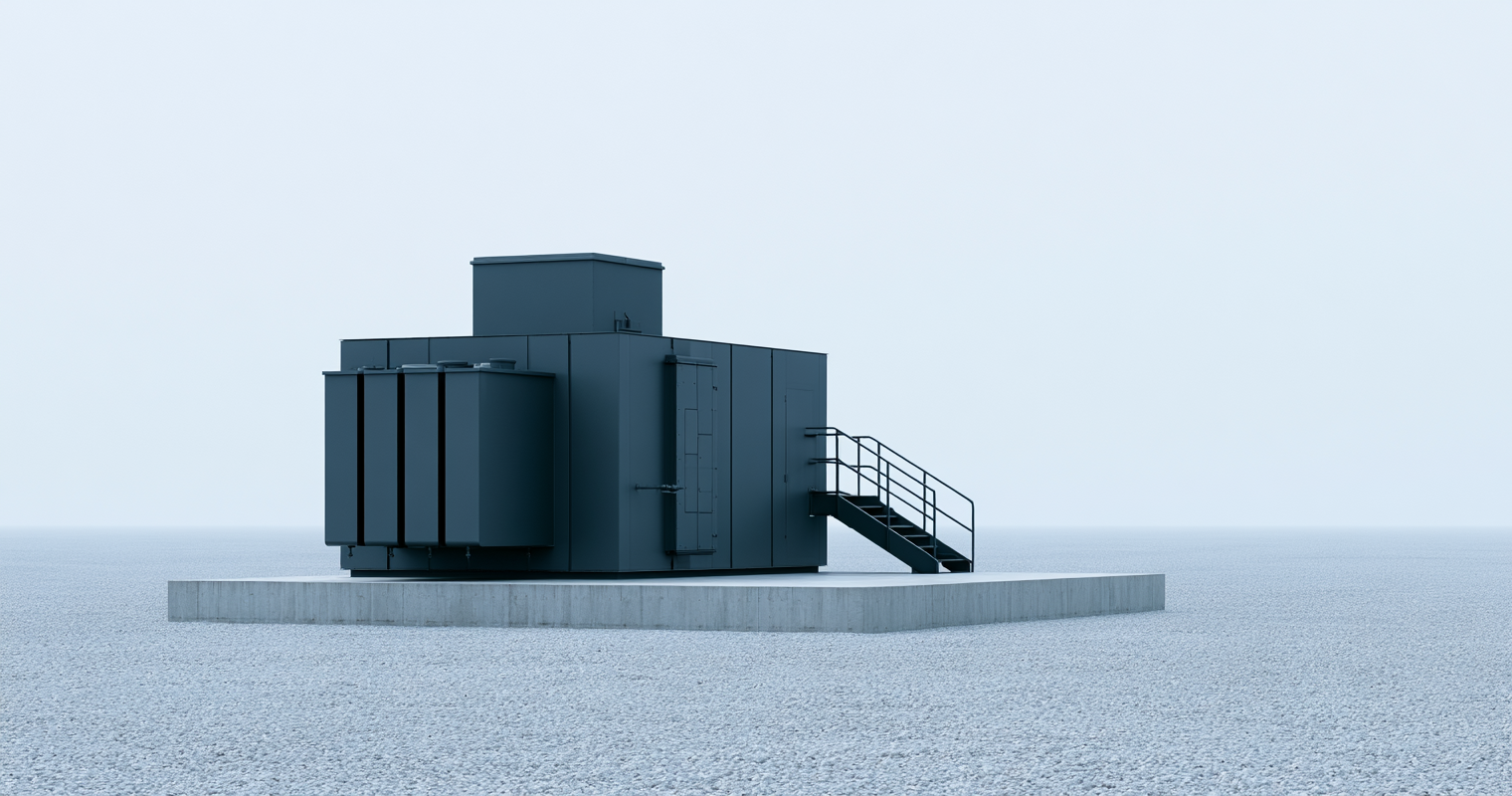
These factors take time because they involve physical systems and public infrastructure. A gigawatt power pipeline cannot be created after an enterprise buyer asks for capacity next quarter. It must be developed years in advance.
That is why vertically integrated AI infrastructure changes the capacity equation. When a provider owns or controls the power path, facilities, and compute layer, the buyer is evaluating an infrastructure system rather than a collection of dependencies. The advantage comes from coordination. Power planning informs facility design. Facility design informs rack density. Rack density informs cooling. Cooling informs deployment timelines. Compute allocation then sits on top of a physical foundation designed for AI from the start.
This structure does not remove complexity. It reduces the number of external constraints that can derail a deployment.
Certain North American regions are becoming serious locations for enterprise AI infrastructure because they combine renewable electricity, favorable climate advantages, available industrial land, and stable operating environments. For organizations evaluating AI data centers, this is not simply a geography question. It represents a different power profile than congested primary markets.
Renewable-heavy grids matter for enterprises with sustainability mandates, but they also matter operationally. AI capacity planning now intersects with corporate energy strategy. Boards and executive teams want to understand where AI workloads run, how much power they consume, and whether infrastructure growth aligns with environmental commitments.
These regions also support the sovereignty requirements facing Canadian enterprises and multinational organizations operating in regulated sectors. Financial services, healthcare, government-adjacent organizations, and other sensitive industries often need Canadian data residency backed by domestic infrastructure. For those buyers, location is a compliance issue as much as an engineering decision.
Infinite Compute has built its Canadian presence around this reality. The company owns power, facilities, and compute capacity as part of a broader North American infrastructure footprint. That vertical integration matters because AI buyers are no longer purchasing isolated hosting capacity. They are securing the physical foundation for production AI.
For enterprise leaders, this offers a way to align AI scale with renewable power, Canadian residency, and infrastructure purpose-built for dense compute. That combination is difficult to assemble after demand has already arrived.
Infinite Compute's power strategy extends across multiple sites, each backed by renewable energy sources including hydro and wind. That diversification creates a strong renewable foundation for large-scale AI infrastructure.
For enterprise AI buyers, renewable power at scale is becoming more than an ESG consideration. It affects site durability, stakeholder approval, long-term planning, and the ability to expand without colliding immediately with grid constraints in saturated markets.
Geographic diversification also matters on its own terms. Enterprises building critical AI systems do not want all capacity tied to one metro, one utility region, or one data center market. AI infrastructure is becoming strategic infrastructure. Geographic planning now belongs in the same conversation as model architecture and security design.
Infinite Compute's presence across multiple North American sites gives enterprise buyers access to a footprint shaped around power availability rather than legacy colocation density. The company's 2.5+ GW committed power pipeline reflects a long-cycle infrastructure strategy, not a short-term response to GPU demand.
That distinction matters. Power-led planning creates optionality. It allows capacity to be matched to workload requirements, jurisdictional needs, renewable energy objectives, and deployment timelines.
Power access alone does not create AI capacity. The facility must be able to use that power effectively. AI clusters require high-density electrical design, advanced cooling, and networking engineered for parallel workloads.
Infinite Compute designs for AI-optimized density above 130 kW per rack, far beyond the 10 to 20 kW typical of legacy environments. That changes the role of the data center. The facility becomes part of the compute system. Cooling, power distribution, and network topology directly affect the usefulness of the cluster.
Efficiency also matters at this scale. Infinite Compute targets PUE below 1.2, reflecting the importance of reducing overhead power consumption in high-density environments. As AI workloads expand from experimentation into production, energy efficiency becomes a board-level infrastructure issue.
Deployment speed is another factor. Traditional data center construction can take 18 to 24 months. Infinite Compute’s modular Rowtie deployment model is designed for 8 to 12 week deployment cycles. That compressed timeline matters because enterprise AI roadmaps cannot wait for conventional construction schedules every time capacity needs to expand. This facility discipline is part of Infinite Compute's broader infrastructure model, where power, cooling, and compute are planned as one system."
The value is not only speed. Modular deployment allows infrastructure growth to follow demand in controlled increments while still relying on a power foundation planned at larger scale.
Enterprise AI leaders face a difficult planning environment. Demand for compute is rising. Hardware cycles are accelerating. Data governance requirements are tightening. Public data center capacity is constrained. Utility queues are lengthening.
In that environment, infrastructure selection must move upstream. CTOs, CIOs, VPs of Infrastructure, and AI executives need to evaluate power position before evaluating cluster size. The first question should be whether the provider has credible access to large-scale power in the jurisdiction where the enterprise needs to operate. The second should be whether the facility can support high-density AI workloads without retrofitting assumptions built for traditional IT. The third should be whether the operating model reduces burden on internal teams rather than shifting infrastructure complexity back onto them.
This is where vertically integrated AI infrastructure becomes strategically relevant. An enterprise does not only need GPUs. It needs a managed infrastructure partner that can align power, facility design, hardware availability, networking, security, compliance, and operations.
The decision also has a timing component. Waiting until internal AI demand is fully proven may feel financially prudent, but infrastructure capacity is now being reserved years in advance. Enterprises that delay power-backed capacity planning may find that their AI roadmap is ready before their infrastructure path exists. For a deeper look at why early positioning compounds over time, see Built Before the Boom: Why the Companies That Secured AI Infrastructure Early Are Winning the Capacity Race.
AI infrastructure capacity is determined by the physical systems beneath the cluster. Power access shapes where AI can run, how fast capacity can expand, which jurisdictions can support regulated workloads, and whether enterprise plans can survive contact with real-world constraints.
GPUs matter. Software matters. Model strategy matters. None of them overcome a site without sufficient power, cooling, and operational depth.
Infinite Compute's owned power assets change the capacity discussion because they start with the scarce layer: controlled access to renewable power at scale. From that foundation, multi-megawatt AI sites can be planned as infrastructure systems rather than assembled through fragile dependencies.
The enterprise decision is direct. Choose AI infrastructure around power access first, or accept that the grid may decide your AI capacity later. Talk to our team about securing power-backed capacity before your competitors do.
New
New
New

.svg)


