

Securing Dedicated GPU Capacity: How Enterprises Evaluate GPU Cloud Availability
Read More
20 Nov 2026

GPU availability has become a board-level infrastructure risk. AI roadmaps now depend on sustained access to high-density compute, not occasional access to isolated accelerators. When production inference, fine-tuning, retrieval systems, autonomous agents, and internal AI platforms all compete for the same constrained hardware, capacity planning becomes business-continuity planning.
81% of enterprise AI projects stall because of infrastructure gaps rather than model quality.
The model may be ready, the data may be governed, and the team may have executive sponsorship. The program still slows when GPU capacity arrives late, clusters fragment across regions, storage underfeeds accelerators, or networking limits distributed training.
The right GPU cloud provider is determined by assured access, workload fit, cluster performance, and operational support. Headline inventory and public rate cards offer limited insight. Enterprises need to know whether the provider can reserve capacity, deploy coherent high-performance AI clusters, support production operations, and keep the architecture aligned with data residency, security, and long-term AI demand.
GPU availability used to matter most during research cycles, when a team could wait for capacity or resize an experiment. Production AI creates a different operating model. Models serve customers, analysts, employees, and revenue-generating products, and infrastructure shortages directly affect service delivery.
The following risks make availability a production concern:
Together, these risks make compute availability inseparable from business continuity.
North American primary data center markets reached 1.4% vacancy, a record low, while wholesale colocation asking rates reached $196 per kW per month in 2025, up 6.6% year over year. (CBRE, H2 2025)
For AI leaders, securing GPUs means securing power, cooling, networking, and deployment capacity as a unified system.
Shared on-demand GPU services support short experiments, variable workloads, and early validation. Dedicated GPU capacity serves a different requirement: a governed infrastructure base for production AI, high-volume inference, fine-tuning, and distributed training.

The distinction matters because production AI depends on repeatability. A training job running on a stable InfiniBand NDR-connected cluster behaves differently from one spread across inconsistent capacity. Availability means more than a GPU appearing in a console; the full system must support the workload at the required scale.
High-performance AI clusters are integrated systems. GPUs matter, but the surrounding architecture determines actual throughput. Constrained networking, weak storage, or insufficient cooling leaves expensive accelerators underused.
Enterprise access starts with workload and capacity planning. Training emphasizes scale-out performance, memory bandwidth, checkpointing, and interconnect efficiency. Inference emphasizes availability, throughput, latency range, and traffic elasticity. Fine-tuning often sits between the two. Planning must also connect near-term model releases with long-term infrastructure, governance, and capital requirements.
Architecture follows workload planning. Traditional enterprise data centers often operate around 10–20 kW per rack, while AI-optimized environments can support more than 130 kW per rack through liquid cooling and electrical systems designed for advanced accelerators.
Networking determines whether distributed training scales efficiently. InfiniBand NDR-connected clusters provide the low-latency, high-bandwidth fabric required for many large workloads. Storage plays an equal role: if it cannot feed the GPUs, utilization falls and completion times increase. Orchestration turns this infrastructure into an operating platform through scheduling, isolation, access controls, quotas, and observability.
Traditional data center construction can take 18–24 months, while modular deployment models can compress infrastructure expansion to 8–12 weeks when power, site design, and supply chains are aligned. This difference can move capacity planning from a long-cycle facilities project into an infrastructure strategy with defined expansion windows.
Monitoring and optimization complete the lifecycle. GPU utilization, queue depth, network congestion, storage throughput, and failure rates inform operations. A provider should help identify bottlenecks, improve scheduling, and support workload growth.
A provider evaluation should test whether promised availability translates into reliable enterprise capacity. Buyers should assess the following areas:
This checklist should be applied before architectural decisions become commitments. Once training pipelines, model registries, and inference services are built around a provider, switching costs rise. Exit planning belongs at the start of the evaluation.
Canadian and United States data residency requirements affect provider selection because AI systems move more than raw datasets. Model weights, embeddings, prompts, logs, checkpoints, and operational telemetry may all contain sensitive information. Architecture must account for where these assets are stored, processed, replicated, monitored, and accessed.
Enterprises may require data to remain within a country because of internal policy, customer commitments, public-sector requirements, or sector-specific governance. The provider conversation should therefore cover where storage is located, where backups land, where monitoring data is processed, and how administrative access is governed. Residency also affects disaster recovery, since resilient designs may need secondary capacity within the same country.
Security certifications support this review, but architecture and legal analysis remain essential. SOC 2 Type II provides an important trust signal for controls and operating discipline. Enterprises must still map their regulatory, contractual, and policy requirements to the provider architecture.
The Canadian federal government announced CAD $2.4 billion in investment in sovereign AI infrastructure.
That commitment reflects a broader shift: nations and enterprises increasingly view AI compute as strategic infrastructure. Provider selection now intersects with sovereignty, resilience, and long-term control over critical workloads.
For a practical breakdown of what Canadian data sovereignty means for AI compute procurement, see What Canadian Data Sovereignty Means for AI Compute Procurement.
A dedicated cluster creates value only when it runs efficiently. Internal engineering teams often own model development and application integration. They should gain infrastructure leverage rather than inherit low-level operational burdens.
Operational support starts before deployment by translating workload demand into accelerator selection, storage sizing, interconnect architecture, orchestration, and utilization targets. During deployment, cluster bring-up requires validation across firmware, drivers, networking, storage, scheduling, and workload benchmarks.
Once live, operations shift to monitoring and optimization. Utilization reports should identify stranded capacity and scheduling issues. Incident response should address failures with clear escalation paths. Capacity reviews should help executives understand when to expand, tune, or shift workloads across training and inference environments. This is where managed AI infrastructure differs from simple GPU access.
Infinite Compute uses a vertically integrated infrastructure model across Canada and the United States. The company owns power, facilities, and compute hardware, giving enterprise buyers a clearer path from energy capacity to deployed AI clusters. That matters when GPU availability depends as much on power and cooling as on silicon.
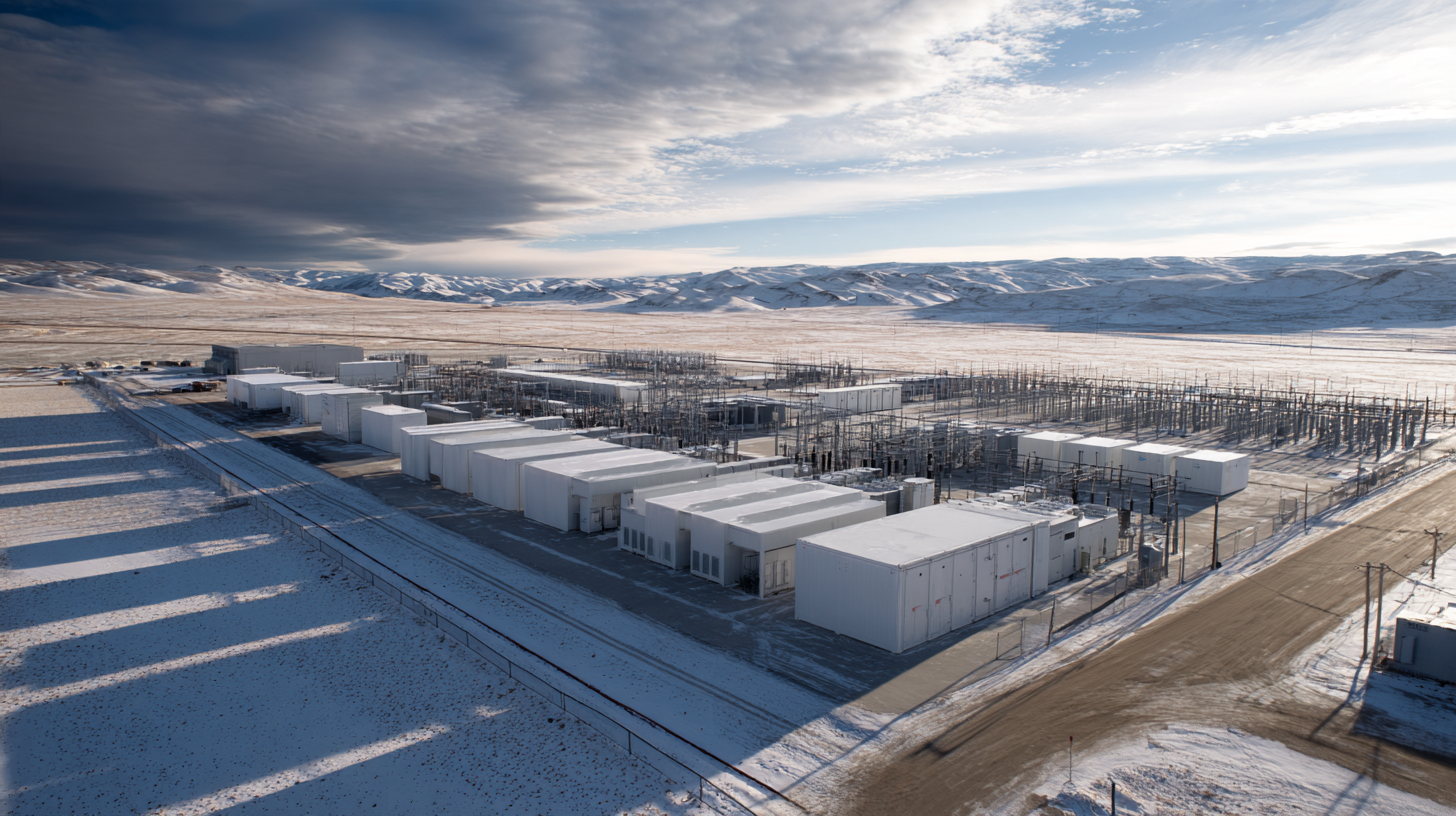
Infinite Compute has a multi-gigawatt power pipeline in development across North America, with renewable energy across Canadian and United States sites. Its infrastructure supports high-density deployments exceeding 130 kW per rack and targets a PUE below 1.2. Modular Rowtie deployment supports expansion cycles of 8–12 weeks, compared with the 18–24 months often associated with traditional construction.
For enterprise workloads, Infinite Compute supports bare-metal clusters ranging from eight to more than 10,000 GPUs, connected with InfiniBand NDR. This gives AI leaders a path from controlled production deployments to large-scale training environments. NVIDIA Partner Network certification supports priority hardware allocation on constrained architectures, where direct procurement waitlists for Blackwell hardware can reach 12 months.
The platform is designed for enterprise operations rather than transient experimentation. Infinite Compute’s managed AI infrastructure addresses capacity planning, cluster deployment, monitoring, and ongoing optimization. SOC 2 Type II compliance provides a trust signal for security review, while zero egress fees on the cloud platform support exit planning and data mobility.
This approach aligns compute availability with the constraints that define enterprise AI: power, density, hardware allocation, network fabric, security, residency, and operational maturity.
For a comparison of the leading managed AI infrastructure providers, see Best Managed AI Infrastructure Providers for Enterprise (2026).
GPU availability has moved from procurement detail to strategic dependency. Enterprises evaluating GPU cloud providers need evidence of dedicated capacity, coherent high-performance clusters, strong operational support, and architecture aligned with data residency and security requirements.
The strongest evaluation process starts with workload reality, then tests providers against capacity commitments, cluster design, interconnect performance, storage, observability, support, compliance, recovery procedures, and exit planning. That process produces a better decision than any comparison based on inventory headlines or rate cards.
Production AI rewards infrastructure discipline. Enterprises that secure dedicated capacity, design for workload fit, and operate clusters as critical systems will build a more reliable path from AI roadmaps to business execution.
Talk to the Infinite Compute team about dedicated GPU capacity.
Disclaimer: InfiniBand is a trademark of NVIDIA Corporation.
New
New
New




