Best Managed AI Infrastructure Providers for Enterprise (2026)
Read More
07 Sep 2026
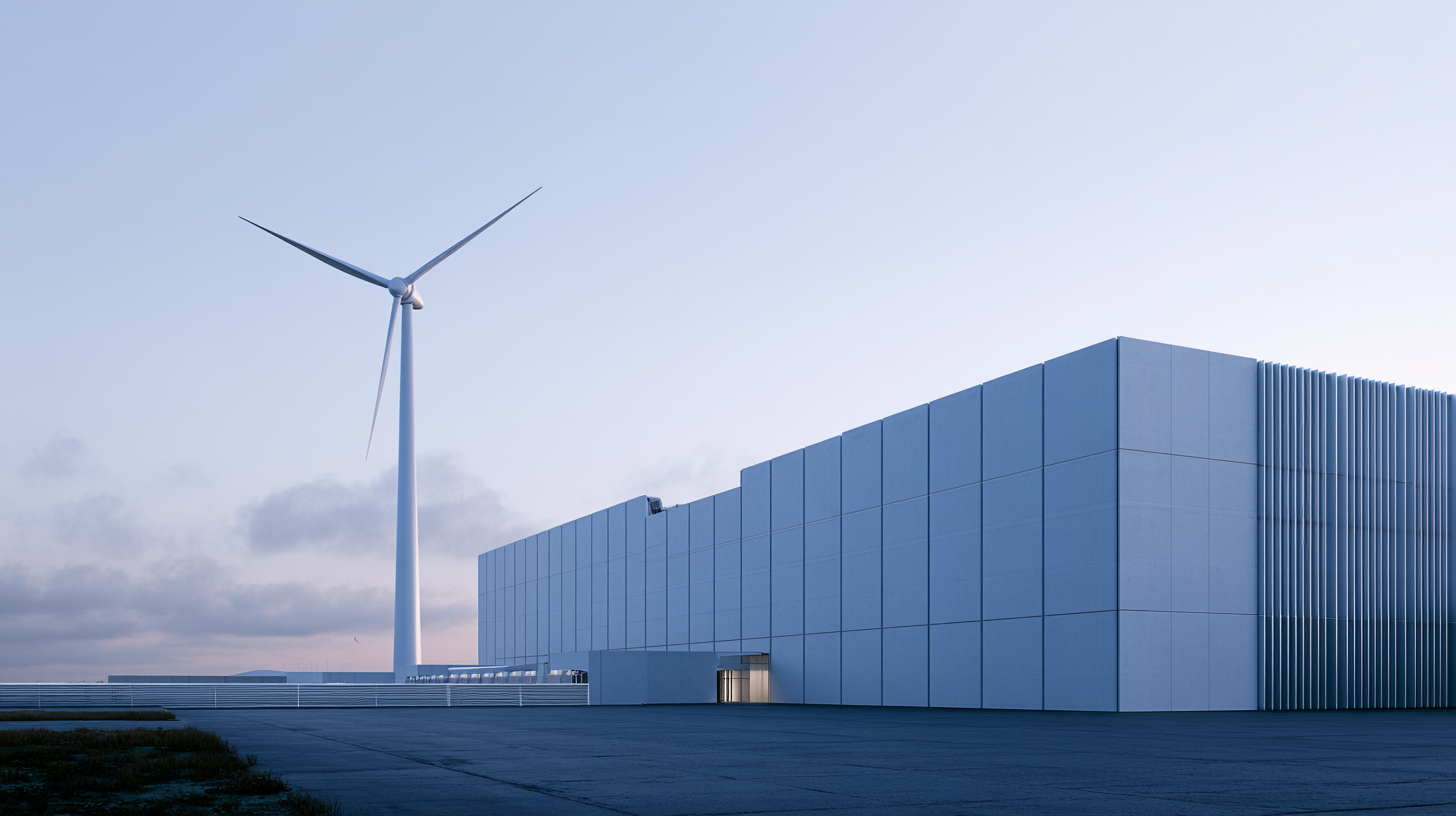
AI infrastructure now sits inside the corporate sustainability boundary. Training runs, inference platforms, retrieval systems, and agentic workloads all consume electricity, cooling, networking, storage, and high-performance hardware. As AI moves from pilots to production, its environmental impact moves from an engineering concern to a board-level reporting issue.
For enterprise CTOs, CIOs, VPs of Engineering, and Heads of AI, the challenge has two dimensions. AI capacity must scale fast enough to support product, analytics, automation, and research roadmaps. At the same time, sustainability teams need defensible emissions data for ESG reporting, investor disclosures, customer questionnaires, and internal reduction targets. Sustainable AI infrastructure must deliver operational visibility, workload efficiency, energy reporting, hardware lifecycle discipline, and governance controls that support credible emissions accounting.
Scope 2 emissions come from purchased electricity, steam, heat, or cooling consumed by assets under an organization's operational control. For AI infrastructure, Scope 2 becomes material when an enterprise operates its own GPU clusters, owns or leases data center space under an accounting boundary that includes energy consumption, or contracts for dedicated capacity where electricity use belongs inside its operational reporting model.
AI training and inference change the scale of this category.
AI-optimized environments can support 130+ kW per rack, compared with 10 to 20 kW in legacy enterprise facilities.
That density increases the importance of power sourcing, cooling efficiency, and accurate metering.
Scope 2 reporting typically requires both location-based and market-based views. The location-based method reflects the average emissions intensity of the grid where the electricity is consumed. The market-based method reflects contractual instruments such as renewable energy purchases, power purchase agreements, and energy attribute certificates where applicable. One shows the physical grid impact. The other shows the procurement strategy behind the electricity supply.
For AI workloads, the most useful Scope 2 data connects electricity consumption to clusters, time periods, and workload classes. A more useful model shows kilowatt-hours consumed by GPU cluster, average rack density, cooling efficiency, utilization rate, carbon intensity by interval, and renewable energy coverage. That detail lets engineering, finance, and sustainability teams align around the same facts.
Scope 3 emissions cover indirect value chain emissions. For AI, Scope 3 often carries more complexity than Scope 2 because outsourced compute, cloud services, hardware manufacturing, transportation, deployment, maintenance, and end-of-life treatment sit across multiple supplier layers.
When an enterprise buys cloud or managed AI infrastructure services, the provider's electricity consumption usually appears in the customer's Scope 3 inventory as purchased goods and services, depending on the organization's accounting boundary. The GPUs, servers, networking equipment, storage, power distribution systems, cooling equipment, and logistics also create upstream emissions. At the end of the hardware lifecycle, reuse, resale, recycling, and disposal practices affect downstream reporting quality.
This makes Scope 3 emissions AI accounting highly dependent on supplier transparency. A cloud invoice rarely shows the embodied carbon of accelerators, the estimated share of facility energy used by a workload, the carbon intensity of the electricity consumed during training, or the lifecycle treatment of retired servers. Yet those inputs increasingly matter for enterprises with science-based targets, customer sustainability obligations, and regulated disclosure processes.
The practical goal for enterprise buyers is traceability. Infrastructure providers should support a clear boundary that explains which emissions categories are covered, which activity data is measured, which values are estimated, which emissions factors are used, and how often the data is refreshed.
AI infrastructure ESG reporting becomes difficult because operating data lives in different systems. Cloud billing data shows spend and usage categories but often separates cost from physical energy consumption. GPU telemetry shows utilization and job performance but often lacks carbon intensity and facility efficiency context. Sustainability platforms track emissions factors and reporting boundaries but often receive aggregate data after the workload has run. Finance may see invoice line items. Engineering may see cluster metrics. Sustainability may see only annual supplier emissions factors. These views rarely reconcile cleanly.
GPU utilization creates another reporting problem. A cluster that draws power while underutilized increases emissions per unit of useful work. Enterprises need visibility into utilization, queue behavior, job completion rates, idle capacity, training efficiency, inference throughput, and performance per watt.
Hardware lifecycle data often represents the weakest link. AI accelerators carry significant embodied emissions from manufacturing. Short refresh cycles can increase Scope 3 impact if equipment life remains poorly managed. Responsible reuse and recycling practices improve outcomes, but only when providers track assets with discipline.
Enterprise buyers should request emissions and efficiency data with the same rigor applied to security and performance:
These metrics connect infrastructure behavior to credible emissions reporting. SOC 2 Type II compliance also matters because ESG reporting depends on reliable systems, controlled processes, and consistent operational discipline.
Managed AI infrastructure gives enterprises a way to scale AI capacity while sparing internal teams from building the full power, facility, cooling, hardware, networking, and operations stack. This matters because AI efficiency depends on decisions made far below the model layer.
Infinite Compute is vertically integrated across power, facilities, and compute hardware in Canada and the United States. That structure gives enterprises a more coherent operating model than fragmented procurement across separate energy, colocation, hardware, cloud, and operations providers.
Infinite Compute has a 2.5+ GW committed power pipeline across North America, with renewable energy across Canadian and US sites. That scale addresses one of the defining constraints in AI infrastructure: access to power on predictable timelines.

The company's AI-optimized environments support high-density racks of 130+ kW, compared with 10 to 20 kW in legacy facilities. High-density design matters for sustainability because GPUs, power delivery, and cooling must operate as a system. Infinite Compute targets PUE below 1.2, an efficiency target aligned with production AI infrastructure.
Managed operations also improve utilization. Underused GPUs produce poor economic and environmental results. Infinite Compute's managed approach supports capacity planning, cluster sizing, orchestration visibility, and hardware lifecycle management across bare metal clusters from 8 to 10,000+ GPUs, connected with InfiniBand NDR. Enterprises gain dedicated infrastructure capacity and operational support while preserving focus on AI strategy, model quality, data governance, and application delivery.
The company's NVIDIA Partner Network certification supports hardware access in a market where direct procurement can face 12-month Blackwell hardware waitlists. That supply-chain position matters for ESG planning because delayed, improvised infrastructure decisions often lead to inefficient deployments, inconsistent reporting, and stranded capacity.
This same long-term discipline is explored further in Purpose-Built and Built to Last: How Infinite Compute's Infrastructure Philosophy Optimizes for Decades, Not Quarters, and is part of the company's broader infrastructure model.
Enterprises can reduce the environmental footprint of AI infrastructure through six practical levers, each addressing a different part of the compute lifecycle.

Right-sizing. Align cluster size with workload profiles rather than overbuilding for peak demand assumptions. Training, fine-tuning, batch inference, real-time inference, and retrieval workloads each place different demands on GPUs, memory, storage, and networking.
Utilization discipline. Higher utilization spreads embodied and operational emissions across more useful work. Scheduling systems, queue management, workload consolidation, and better capacity forecasting all help. Reducing wasted runs often delivers faster sustainability gains than changing hardware alone.
Efficient hardware selection. Newer accelerators can deliver better performance per watt for suitable workloads. Teams should evaluate performance per watt at the workload level. The relevant metric is useful output per unit of energy.
Workload optimization. Training efficiency improves through better data pipelines, optimized batch sizes, mixed precision where appropriate, checkpoint management, and distributed training design. Inference efficiency improves through batching, caching, quantization, distillation, and autoscaling policies.
Carbon-aware scheduling. Flexible workloads can shift toward periods when electricity carbon intensity is lower. Enterprises should classify workloads by urgency and carbon flexibility.
Hardware life extension and responsible disposition. Extending equipment life can reduce embodied emissions per workload, especially when older hardware remains suitable for inference, development, or internal analytics. Retired servers should move through controlled reuse, resale, certified recycling, or secure destruction processes with strong asset tracking.
Together, these practices reduce environmental impact by improving the amount of useful work produced from infrastructure and energy.
Procurement teams should evaluate sustainable AI infrastructure through a combined lens of emissions data, operational performance, governance, and long-term capacity:
This framework helps buyers distinguish measurable sustainability performance from broad environmental claims.
Sustainability strategy has to account for physical capacity.
North American primary data center markets reached a record-low 1.4% vacancy. Wholesale colocation asking rates reached $196 per kW per month in 2025, up 6.6% year over year.
These conditions make last-minute infrastructure procurement risky. AI capacity also faces hardware constraints, and traditional construction timelines can run 18 to 24 months. Infinite Compute's Rowtie modular deployment model can support 8 to 12 week deployment cycles, creating a faster path to capacity while keeping power, cooling, and compute aligned.
For enterprise leaders, this changes the planning model. AI infrastructure should be treated as a multi-year capacity strategy tied to energy sourcing, emissions reporting, hardware lifecycle, security controls, and workload roadmaps. Short-term procurement decisions can create long-term ESG reporting gaps.
Enterprise AI and ESG leaders can connect infrastructure planning with emissions reporting through a focused roadmap:
This roadmap turns emissions accounting into an operating discipline rather than a retrospective reporting exercise.
The direction of the market is clear. Emissions accounting is becoming a standard requirement in enterprise AI procurement, and infrastructure decisions made today will shape reporting obligations for years. The enterprises best positioned for the next phase of AI adoption will be those that treat energy, capacity, and emissions data as core inputs to AI strategy rather than afterthoughts to it. Talk to our team about building AI infrastructure your sustainability reporting can actually stand behind.
Disclaimer: InfiniBand is a trademark of NVIDIA Corporation.


