Confidential AI Infrastructure: GPU Attestation, Hardware Trust, and the Future of Regulated Workloads
Read More
09 Oct 2026

Enterprise AI strategy now depends on physical infrastructure decisions that will compound for years. Model selection matters. Platform architecture matters. Data quality matters. Yet the ability to produce useful AI output at scale depends on a deeper foundation: power, cooling, networking, rack density, site selection, and operational control.
That foundation cannot be treated as a short-term capacity purchase. AI workloads impose sustained electrical, thermal, and networking demands that general-purpose enterprise infrastructure was never designed to absorb at scale. The result is visible across the market. North American primary data center vacancy has fallen to a record low of 1.4%. Wholesale colocation asking rates reached $196 per kW per month in 2025, up 6.6% year over year. Direct procurement of Blackwell-class hardware can involve waitlists of up to 12 months.
For CTOs and infrastructure leaders, the question has changed. The priority is securing purpose-built AI infrastructure that can turn power into production AI output reliably, efficiently, and responsibly over a multi-year horizon.
AI data center design begins with the workload profile. Training, fine-tuning, retrieval-augmented generation, high-volume inference, and agentic systems all place different pressure on infrastructure. The common denominator is intensity. AI systems concentrate power draw, heat generation, east-west network traffic, storage throughput, and hardware utilization into dense physical footprints.
General-purpose facilities were built for a different era of computing. Traditional enterprise racks commonly operated around 10 to 20 kW per rack. That profile suited mixed workloads, conventional virtualization, storage arrays, and CPU-heavy applications. Modern AI clusters can require 130+ kW per rack. At that density, every facility assumption changes.
Power distribution must support continuous high load. Cooling must remove heat from dense GPU systems without forcing hardware to throttle. Network fabric must sustain massive communication between GPUs, nodes, and storage systems. Rack design must account for weight, cabling, thermal flow, serviceability, and liquid cooling integration. Facility operations must be tuned for the reality that a small inefficiency at the rack level becomes material at cluster scale.
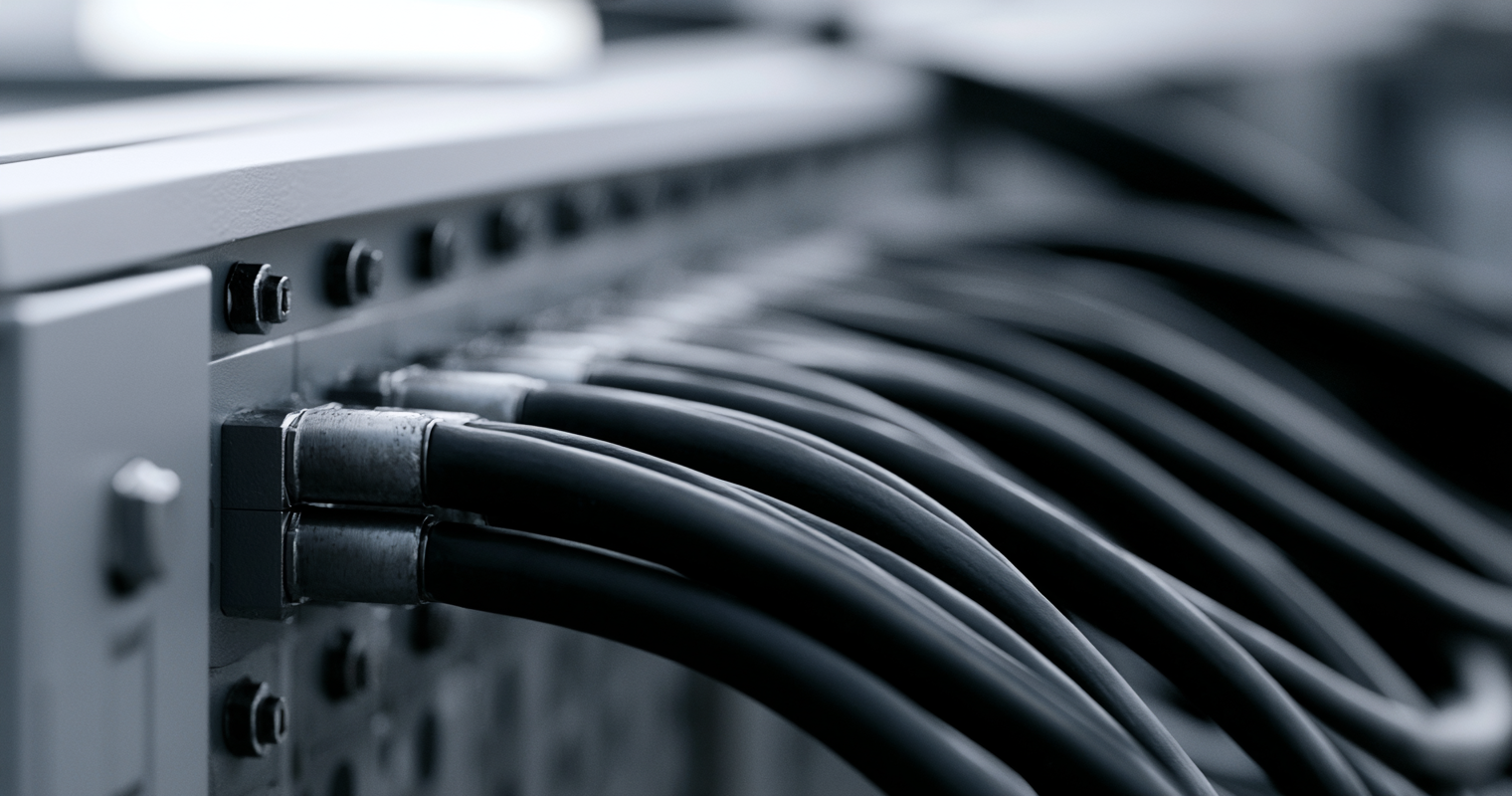
Retrofitted facilities can serve many enterprise needs well. They remain valuable for workloads that fit within their original design envelope. Purpose-built AI infrastructure is designed around the sustained physics of accelerated computing from the start. That distinction matters because AI output depends on the whole system working together, with the GPU as one part of a larger physical design.
Power is the first constraint because every token produced by an AI system starts as electricity. A cluster may be specified in GPUs, but its practical capacity is bounded by available megawatts, transformer capacity, distribution design, backup architecture, and interconnection certainty.
This is why AI infrastructure strategy has become inseparable from energy strategy. A deployment that depends on uncertain utility timelines or constrained power headroom carries risk before the first rack is installed. A facility with insufficient power density may host hardware but fail to operate it at full economic potential. A campus without long-term energy planning may support today’s cluster while limiting tomorrow’s expansion.
Infinite Compute's infrastructure philosophy starts with power ownership and control. The company has a 2.5+ GW committed power pipeline across North America. That power position shapes what can be designed, committed, and operated over time. Enterprise AI leaders need infrastructure capacity that aligns with their roadmap, not isolated deployments that must be renegotiated every time demand grows.
The geography of that power also matters. Its Canadian sites are anchored in renewable energy sourcing. These facts carry operational weight. Energy source, grid stability, and jurisdictional context influence long-term cost governance, sustainability reporting, and procurement risk.
As rack density rises, cooling becomes a primary performance system. Air-cooled environments can support many workloads, but high-density AI clusters require a more direct approach to heat removal. Liquid-cooled AI infrastructure allows facilities to support dense GPU deployments while preserving thermal stability and equipment performance.
Thermal stability affects output. When systems run too hot, hardware can throttle, maintenance risk increases, and utilization targets become harder to sustain. In AI environments, underutilized or thermally constrained GPUs represent stranded capital. The facility may appear fully deployed while the workload receives less compute than the hardware should deliver.
Purpose-built AI data center design treats cooling as part of the compute architecture. Liquid distribution, heat exchange, rack layout, service access, containment strategy, and monitoring all shape how reliably a cluster can run. The goal extends beyond heat removal. The goal is to sustain productive, high-density operation over long periods.
Infinite Compute designs for AI-optimized densities of 130+ kW per rack and targets PUE below 1.2. That efficiency target reflects a broader design principle: less wasted overhead means more energy can be directed toward useful computation. In practical terms, better facility efficiency improves the relationship between infrastructure input and AI output.
AI workloads run as tightly coupled systems. GPUs exchange gradients, model states, embeddings, and intermediate results across high-speed interconnects. Storage systems feed training and inference pipelines. Orchestration layers schedule work across nodes that must remain synchronized.
A weak network fabric reduces the value of strong compute hardware. Latency, congestion, oversubscription, and poor topology design can all lower effective throughput. The issue becomes especially important as enterprises move from experimentation to production workloads, where utilization and predictability matter more than peak benchmark claims.
Purpose-built AI infrastructure accounts for network architecture at the facility level. Rack placement, cable pathways, power domains, cooling domains, and interconnect design all affect cluster behavior. Infinite Compute supports bare metal clusters from 8 to 10,000+ GPUs connected by InfiniBand NDR. That scale range matters because enterprise AI programs rarely stay static. A platform decision should support controlled growth from initial production clusters to larger dedicated environments without forcing an architectural reset.
Rack design may look like a facilities issue, but in AI infrastructure it becomes an economic lever. The rack determines how power, cooling, networking, cabling, and service access converge. Poor rack-level design slows maintenance, complicates expansion, increases failure exposure, and creates operational drag.
High-density AI racks require planning around liquid cooling manifolds, power distribution, airflow boundaries, physical load, cable management, and rapid component replacement. Each design choice affects uptime, utilization, and hardware lifecycle management. At enterprise scale, these details become material because AI infrastructure economics depend on keeping expensive assets productive.
This is where the idea of tokens per infrastructure dollar becomes useful. Enterprises should evaluate infrastructure by the amount of reliable AI output it produces for each committed dollar across the full stack. That measure includes GPUs, energy, cooling overhead, networking efficiency, storage throughput, operational labor, maintenance windows, and expansion capacity.
Tokens per infrastructure dollar is a better optimization target than isolated hardware acquisition. A cluster with premium accelerators can still underperform if power is constrained, cooling is inefficient, networking is poorly matched, or operations are fragmented. A purpose-built environment improves output by aligning the entire physical and operational system around sustained AI workload optimization.
AI infrastructure decisions have a lifespan that extends far beyond quarterly planning cycles. Power agreements, land development, community relationships, substation planning, cooling systems, modular expansion, and hardware refresh paths all operate on long timelines. A facility that supports enterprise AI in 2026 must also have a credible path to support higher-density systems, larger clusters, and more demanding inference volumes in the years that follow.
This long-term view requires stewardship. Energy must be secured responsibly. Land must be developed with durability and expansion in mind. Communities must see infrastructure as a serious long-term presence rather than a temporary compute installation. AI data centers draw on local grids, local workforces, local permitting environments, and local trust. Durable infrastructure companies manage those relationships with discipline.
Infinite Compute's Canadian footprint reflects this philosophy, offering renewable power profiles, cold-climate operating advantages, and sovereign data residency for organizations that require Canadian infrastructure. For regulated sectors, sovereignty is often a procurement requirement. Canadian-domiciled infrastructure supports contractual data residency under domestic frameworks, including PIPEDA, while aligning with Canada’s broader investment in sovereign AI infrastructure.
The Canadian federal government has committed CAD $2.4B toward sovereign AI infrastructure. That investment signals a national recognition that compute capacity is strategic infrastructure. Enterprises making long-term AI platform decisions should treat it the same way.
Long-term infrastructure does not have to move slowly. Traditional data center construction can take 18 to 24 months. Infinite Compute’s modular Rowtie deployment model supports 8 to 12 week modular deployment timelines. The value of modularity is strongest when it is connected to a durable site, secured power, and a coherent operating model.
Fast deployment without long-term planning creates fragmentation. Long planning cycles without deployable capacity slow AI roadmaps. Purpose-built modular infrastructure resolves that tension by allowing enterprises to add capacity in phases while preserving the integrity of the larger design.
This matters because 81% of enterprise AI projects stall due to infrastructure gaps rather than model quality. Many organizations have the talent, data, and use cases to advance AI initiatives. Their bottleneck appears when prototypes need production-grade infrastructure with predictable capacity, compliance posture, and operational support.
Infinite Compute’s model addresses that gap through vertical integration. The company owns power assets, facilities, and compute hardware, and manages deployments for enterprise customers. NVIDIA Partner Network certification supports priority hardware allocation. SOC 2 Type II compliance supports enterprise governance requirements. Zero egress fees on the cloud platform reduce friction in data movement without shifting the conversation into short-term rental economics.
The point is operational coherence. Enterprise AI infrastructure works best when energy, facility design, hardware procurement, cluster architecture, compliance, and management are aligned under one accountable operating model. This coherence is the foundation of Infinite Compute's broader infrastructure model.
Enterprise leaders now face a decision that will shape the next decade of AI capability. They can assemble capacity from disconnected layers and manage the resulting complexity internally. Or they can anchor their AI roadmap in purpose-built AI infrastructure designed around power, cooling, networking, rack density, sovereignty, and long-term stewardship.
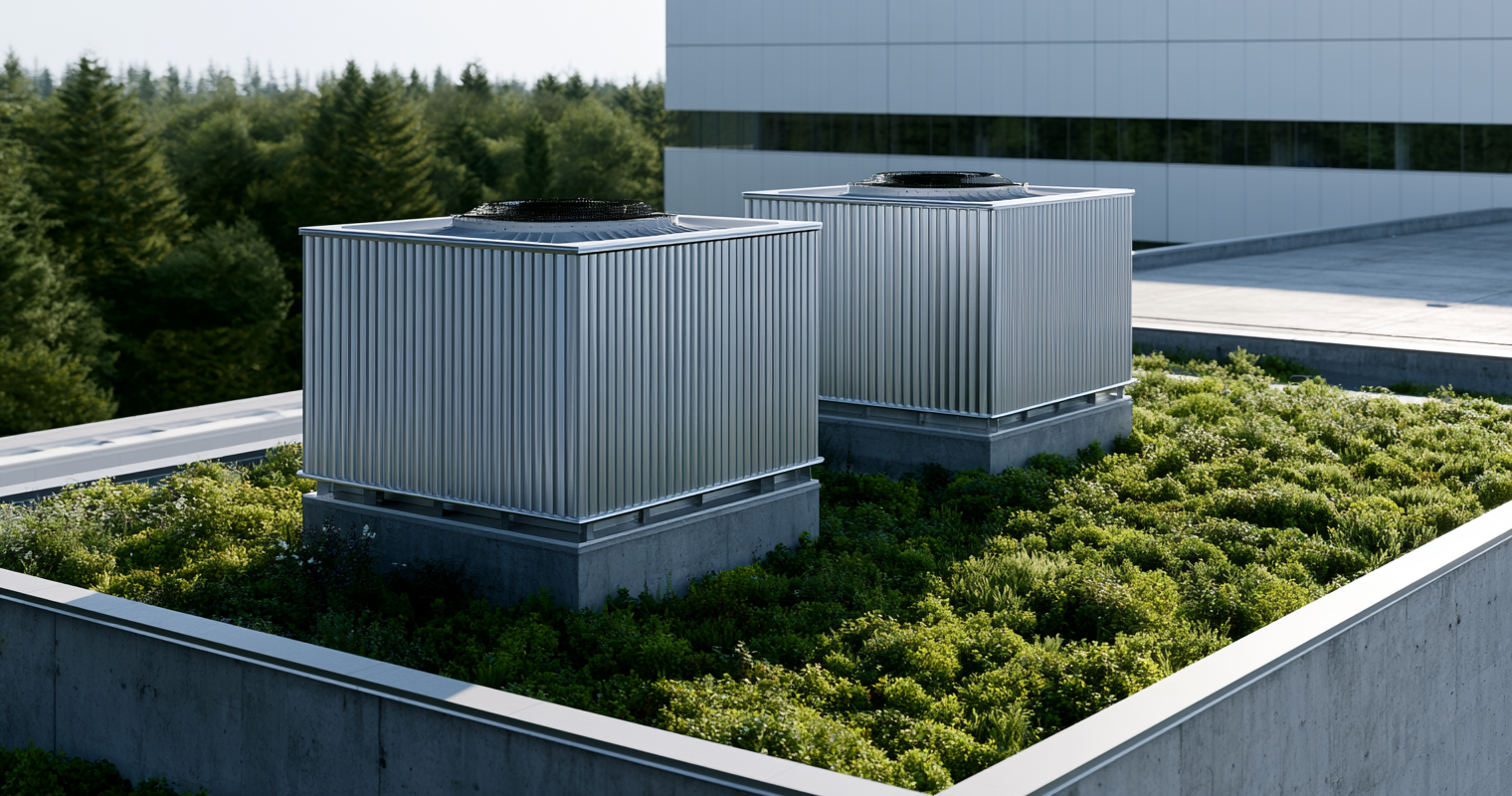
The second path requires more discipline at the outset. It asks leaders to evaluate infrastructure by durable output rather than short-term availability. It reframes success around tokens per infrastructure dollar, sustained utilization, energy responsibility, and the ability to scale without rebuilding the foundation. This same principle, that true full-stack ownership changes what's possible, is explored in The True Turnkey AI Cloud: How Owning the Full Stack Changes Enterprise AI. That same long-term stewardship also shapes how AI infrastructure is measured for sustainability. See Sustainable AI Infrastructure for ESG Reporting: Scope 2 and Scope 3.
AI will keep changing. Models will grow, shrink, specialize, and move closer to production workflows across the enterprise. The physical demands beneath them will remain unforgiving. Power must be real. Cooling must be engineered. Networks must be designed for cluster behavior. Land and communities must be treated as part of the infrastructure system.
Purpose-built infrastructure is the responsible foundation for enterprises that expect AI to become a core operating capability. The organizations that make that choice now will not spend the next decade rebuilding the ground beneath their AI strategy. Talk to our team about building AI infrastructure designed to last.
New
New
New

.svg)


