Best Managed AI Infrastructure Providers for Enterprise (2026)
Read More
07 Sep 2026
.png)
Enterprise AI has moved from isolated pilots to production systems that influence revenue, operations, risk, and customer experience. That shift changes the infrastructure question. A single cluster in a single region may support early experimentation. Production AI requires a broader operating model.
A multi-region AI infrastructure strategy gives enterprises the ability to place model training, fine-tuning, inference, and data services where they serve the business best. For organizations operating across Canada and the United States, that means aligning compute capacity with users, data residency obligations, latency requirements, energy availability, and business continuity plans.
The infrastructure market has tightened at the same time.
North American primary data center markets reached 1.4% vacancy, a record low. Wholesale colocation asking rates reached $196/kW/month in 2025, up 6.6% year over year.
Direct procurement of advanced GPU systems can involve Blackwell hardware waitlists of up to 12 months. These constraints make regional capacity planning a board-level issue, rather than a technical procurement task. AI strategy now depends on access to power, facilities, networking, hardware, and operational expertise across multiple jurisdictions.
Training, fine-tuning, and inference place different demands on infrastructure. Training requires dense GPU clusters, high-speed interconnect, and sustained power. Fine-tuning often sits closer to sensitive enterprise data, where governance and residency obligations shape placement. Inference needs predictable performance near users, applications, and transaction systems.
A single-region design forces tradeoffs across those requirements. A multi-region model gives enterprises more control. Training workloads can run where power and GPU density support large-scale jobs. Fine-tuning can remain within the jurisdiction where data governance requirements apply. Inference can move closer to users in Canada or the United States to improve responsiveness and reduce unnecessary data movement.
Business continuity adds another reason. AI systems increasingly support customer service, fraud detection, manufacturing workflows, financial modeling, and software development. When those systems become embedded in daily operations, downtime affects the business directly. Regional redundancy gives AI platforms a stronger foundation for failover, recovery, and planned maintenance.
Regional workload placement begins with the workload itself. Training, fine-tuning, batch inference, real-time inference, and retrieval-augmented generation each have different performance profiles. Separating them by latency, data gravity, utilization, and governance gives enterprise teams a cleaner architecture.
Together, these criteria connect workload requirements to practical regional capacity decisions.
Canada and the United States offer complementary advantages for enterprise AI infrastructure. Canadian priorities often center on sovereignty, renewable energy, and domestic data controls.
Canada has committed CAD $2.4B in federal investment toward sovereign AI infrastructure, signaling the national importance of compute capacity.
For enterprises with Canadian operations, this strengthens the case for domestic AI capacity that supports data residency and long-term autonomy.
US regional capacity supports inference close to major user populations, cross-border business operations, and domestic placement for US-governed data. A multi-region approach across both countries gives enterprises flexibility. Sensitive workloads can remain inside the required jurisdiction. Regional inference can follow users. Training capacity can align with available power and cluster density. Disaster recovery can span jurisdictions when policy permits.
Resilient AI operations require more than backup capacity. AI platforms need regional redundancy across compute, networking, storage, identity, orchestration, observability, and recovery procedures.
High-performance networking sits at the center of large-scale AI. Training clusters require low-latency, high-bandwidth connections between GPUs. Infinite Compute supports bare metal clusters from 8 to 10,000+ GPUs with InfiniBand NDR connectivity, an architecture suited to intensive training and fine-tuning workloads. Regional network fabric also needs secure interconnects, predictable routing, and bandwidth planning for model artifacts, datasets, and replication workflows.
Distributed storage is equally important. Storage design should account for local performance, replication policy, retention rules, and recovery objectives. A stronger design keeps data close to the workloads that need it while replicating critical artifacts under policy.
Workload portability and observability complete the picture. Containerized workloads, Kubernetes-native orchestration, and versioned model artifacts allow AI services to move between regions with less friction. Consistent visibility into GPU utilization, cluster health, network behavior, and service metrics lets teams plan capacity, detect degradation, and coordinate failover.

Disaster recovery for AI systems requires clear definitions of what must recover, where it must recover, and how fast each component returns to service.
Inference often requires the most immediate failover planning because it sits closest to production applications. Enterprises can design active-active or active-standby patterns depending on workload criticality, residency rules, and performance expectations. In either pattern, model versions, configuration, access policy, and monitoring should remain consistent across regions.
Training workloads require a different model. Large jobs may checkpoint periodically and resume in another region when capacity and policy allow. The goal is to protect work in progress and maintain delivery timelines rather than duplicate every training process in real time.
Recovery plans should specify which data can move between Canada and the United States, which systems require jurisdiction-specific recovery, and which teams have authority to trigger failover. Those decisions should be made before an incident.
Enterprise AI infrastructure combines specialized hardware, dense power, liquid cooling, high-speed networking, orchestration, security, and lifecycle planning. Building that capability internally requires capital, talent, procurement leverage, and operating maturity. Many enterprises prefer to focus internal teams on models, data products, and business integration rather than cluster operations.
Managed AI infrastructure shifts that burden to a provider built for it. Infinite Compute manages GPU provisioning, cluster deployment, orchestration, monitoring, scaling, lifecycle management, and operational support across multiple regions. Provisioning begins with workload requirements, capacity plans, and regional placement. Once live, monitoring and operational support keep the environment aligned with performance and availability requirements.
81% of enterprise AI projects stall due to infrastructure gaps rather than model quality.
The issue often sits below the application layer. Power, cooling, capacity, hardware lead times, network design, and operational support determine whether AI roadmaps reach production.
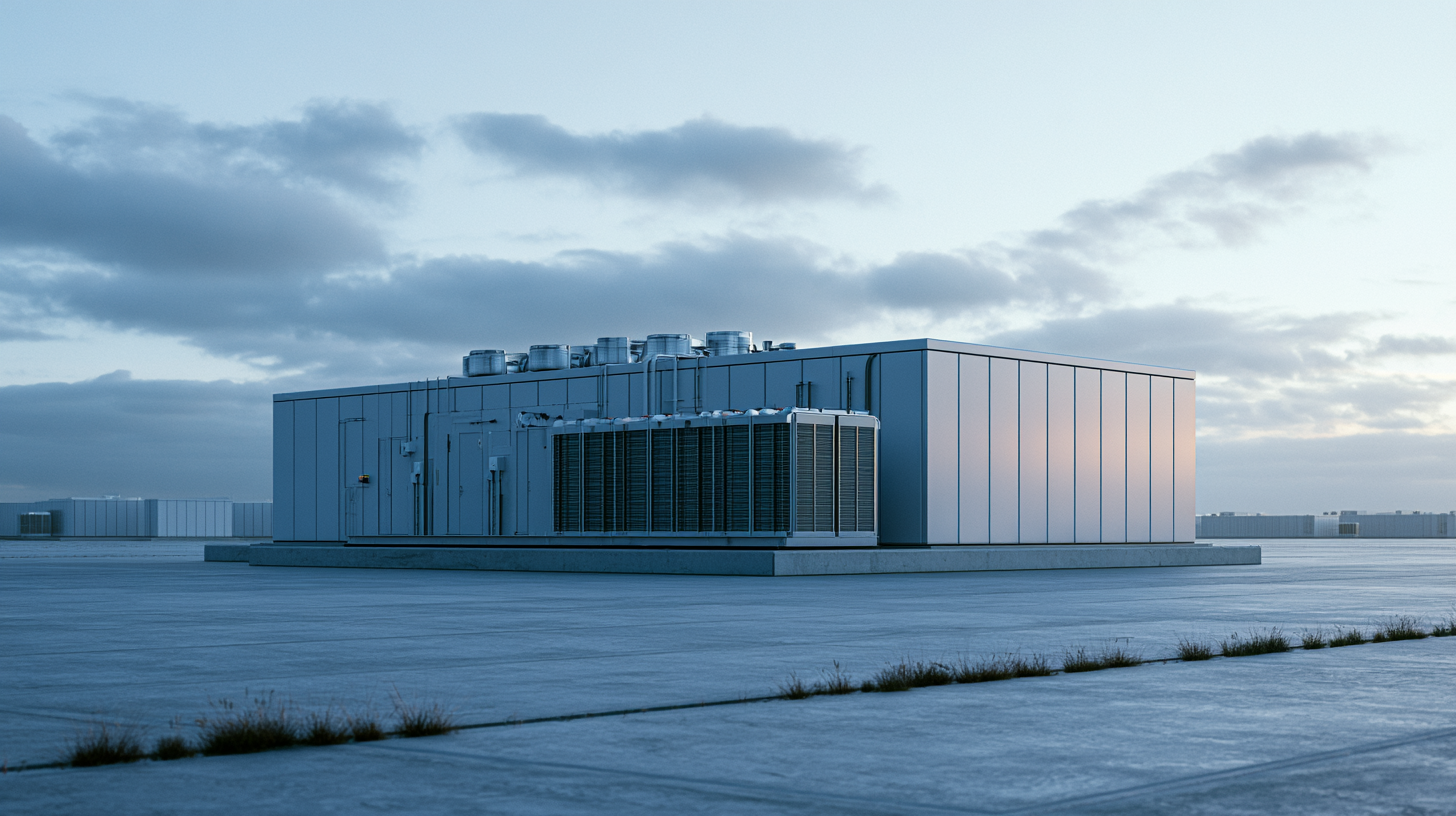
Infinite Compute is a vertically integrated AI infrastructure company operating across Canada and the United States. The company owns power assets, facilities, and compute hardware, which gives enterprise customers a stronger foundation for capacity planning and deployment execution.
That control matters in a constrained market. Infinite Compute has a 2.5+ GW committed power pipeline across North America and renewable energy across Canadian and US sites. AI infrastructure depends on power availability as much as GPU allocation. Vertical integration gives Infinite Compute direct control over critical inputs that shape deployment timing and long-term flexibility.
Deployment speed also matters. Traditional data center construction can take 18 to 24 months. Infinite Compute's modular Rowtie approach supports 8 to 12 week modular deployment for AI infrastructure capacity. For enterprises planning regional expansion, that compression can change the timeline for production AI initiatives.
The physical infrastructure is built for AI density. Infinite Compute supports AI-optimized racks at 130+ kW per rack and targets PUE below 1.2. The company is NVIDIA Partner Network certified, supporting priority hardware allocation in a market where direct procurement can face long waitlists. Its bare metal clusters scale from 8 to 10,000+ GPUs and connect through InfiniBand NDR for high-performance AI workloads.
The platform also supports cost predictability through zero egress fees on Infinite Compute's cloud platform. For enterprises moving large model artifacts, evaluation data, and logs, data movement policy has a direct impact on architecture and budgeting.
Multi-region AI infrastructure increases the importance of consistent governance. Every region must enforce the same enterprise security posture while respecting local data residency requirements.
These controls create a common governance foundation without ignoring jurisdiction-specific requirements.
Infinite Compute holds SOC 2 Type II compliance. For enterprise buyers, SOC 2 Type II controls provide an important assurance layer around security and operational practices. Combined with regional data residency design, tenant isolation, and managed operations, those controls support governance across multi-region AI deployments. This same sovereignty and residency logic is explored in more depth in Canadian Data Sovereignty & AI Compute: A Compliance Guide, and is part of Infinite Compute's broader AI Cloud Platform.
A practical evaluation framework should cover several connected capabilities.
Evaluating these factors together reveals whether a provider can support both immediate deployment and long-term regional growth.
A multi-region AI infrastructure strategy across Canada and the United States gives enterprise leaders a stronger foundation for production AI. It aligns workloads with users, data, power, performance, and governance. It reduces single-region exposure and creates room for expansion. It gives AI teams a path to scale without turning infrastructure operations into their core business.
The market has already made the constraint clear. GPU access, power availability, data center capacity, and operational expertise now shape enterprise AI outcomes. Organizations that secure resilient, managed, multi-region infrastructure can place workloads where they belong, expand with discipline, and keep AI systems aligned with enterprise risk and growth plans.
The enterprises that treat AI infrastructure as strategic regional capacity, rather than isolated compute procurement, are positioned to scale with control. Talk to our team about designing a multi-region AI infrastructure strategy across Canada and the United States.
Disclaimer: InfiniBand is a trademark of NVIDIA Corporation.


