Confidential AI Infrastructure: GPU Attestation, Hardware Trust, and the Future of Regulated Workloads
Read More
09 Oct 2026
.png)
Agentic AI turns inference into a persistent infrastructure problem. A copilot that answers one prompt can tolerate short-lived compute. An agent that plans, calls tools, reads documents, writes to systems, coordinates with other agents, and keeps state across sessions needs a different foundation.
The difference matters because enterprise agent systems are moving into workflows where latency, memory, security, and continuity affect business outcomes. A customer support copilot can recover from a slow response. An automated decision system tied to finance, operations, logistics, or clinical workflows needs stable execution across thousands of concurrent reasoning loops. That changes the infrastructure requirement from GPU access to managed AI infrastructure.
For Heads of AI, VP AI Platform leaders, CTOs, and engineering executives, the question has shifted from whether the model can reason to whether the infrastructure can support agentic AI reliably when reasoning becomes continuous, stateful, and operationally embedded.
According to Wolters Kluwer, 44% of finance teams will use agentic AI in 2026, representing an increase of over 600% from the prior year.
Across industries, enterprise agent deployments are moving from controlled pilots into production systems that run continuously, call tools autonomously, and maintain context across days or weeks of operation.
Standard inference is usually treated as a request-response workload. A user submits a prompt. The model generates an answer. The system releases the active state when the response completes. This pattern can scale with autoscaling, batching, and conventional serving optimizations because each request has a relatively bounded lifecycle.
Agentic AI behaves differently. The first model call often starts a longer execution chain. The agent may break the task into subtasks, retrieve context, call external tools, inspect results, revise a plan, call another model, invoke a second agent, and update memory before responding. In multi-agent AI infrastructure, that pattern multiplies because each agent may maintain its own context, state, tool history, and working memory.
This creates infrastructure pressure that exceeds what standard inference platforms were designed to handle. The workload extends well beyond tokens per second. It is defined by concurrency, context length, memory retention, tool latency, cache reuse, inter-agent communication, and the reliability of state management across long-running sessions.
Training infrastructure optimizes for large, scheduled, high-throughput jobs. Standard inference infrastructure optimizes for serving many short requests. Infrastructure for AI agents sits between those worlds. It needs high-performance GPUs, low-latency networking, persistent memory strategy, deterministic orchestration, and operational management that understands how agent workloads fail in production.
Agentic systems keep working after the first output. That persistence changes the economics and architecture of AI infrastructure.
A production agent may hold an active session for minutes or hours. It may pause while waiting for a tool response, resume with new context, and continue a reasoning loop. During that process, the infrastructure must preserve enough state to avoid repeating expensive computation while still making room for other active sessions. When thousands of users or workflows run at once, persistence becomes one of the main drivers of capacity planning.
This persistence also affects utilization. GPU capacity that looks available in a simple dashboard may already be committed to active agent sessions. Memory may be fragmented across contexts. KV cache may occupy a large share of accelerator memory even when compute utilization appears moderate. Network paths may be carrying tool calls, retrieval traffic, cache transfers, and orchestration messages rather than pure model tokens.
That is why agentic AI infrastructure requires planning beyond GPU count alone. The enterprise must understand how many agents will run concurrently, how long sessions remain active, how much context each session carries, how often agents call tools, and how state moves between GPU memory, system memory, storage, and external services.
KV cache infrastructure is one of the most important design considerations for production agent systems. During transformer inference, the key-value cache stores attention state from previous tokens, allowing the model to skip recomputing the full context at every generation step. This is essential for performance, especially with long context windows.
Agentic AI pushes KV cache requirements higher because agents often carry large prompts, retrieved documents, tool outputs, intermediate reasoning traces, policy instructions, and conversation history. A single agent session can accumulate significant context. A multi-agent workflow can multiply that footprint across several parallel or sequential model calls.
KV cache growth creates direct GPU memory pressure. As context length increases, the cache consumes more memory per active session. As concurrency rises, the total cache footprint grows again. Larger models intensify the pressure because each token requires more cache memory across more layers and attention heads. The result is a serving environment where memory capacity becomes the limiting factor ahead of raw compute.
A single enterprise agent session running a 128,000 token context window can consume 16 to 42 GB of GPU HBM in KV cache alone, depending on model size, architecture, and precision. At 100 concurrent sessions, that is 1.6 to 4.2 TB of KV cache demand.

At 10,000 concurrent sessions, the math becomes impossible without a dedicated context memory tier. NVIDIA formalized this problem in January 2026 with its CMX context memory platform, which extends GPU KV cache into NVMe-based storage across a 3-tier hierarchy spanning GPU HBM, CPU DRAM, and NVMe SSD. The existence of a dedicated NVIDIA platform for this problem confirms that KV cache management has become a first-order infrastructure design requirement, one that belongs in facility planning rather than application tuning.
Poor KV cache management leads to lower concurrency, increased latency, cache eviction, recomputation overhead, and unpredictable response times. Dedicated infrastructure with sufficient HBM headroom and cache-aware orchestration is the foundation for production agent systems that scale predictably.
Agentic workloads create more internal communication than standard inference. A basic inference request may involve one model server, one response stream, and limited external coordination. An agentic workflow may involve retrieval systems, databases, policy engines, tool APIs, message queues, memory stores, and multiple model endpoints. Each additional dependency adds latency and failure surface.
At the GPU cluster level, network fabric matters because large models often run across multiple GPUs and nodes. Tensor parallelism, pipeline parallelism, distributed serving, and high-concurrency cache movement depend on low-latency, high-bandwidth interconnects. When agents are waiting on multiple model calls and tool responses, small delays accumulate into slow workflows.
This is especially important for automated decision systems. A workflow that calls three agents, retrieves from several internal sources, and validates a proposed action through policy checks can become unusable if each infrastructure layer adds unpredictable latency. The issue compounds when concurrent workflows compete for the same shared network fabric.
Dedicated bare metal clusters with InfiniBand NDR connectivity help reduce this variability by giving enterprise workloads a defined topology and predictable communication paths. For agentic AI, that predictability is central. The orchestration system can place workloads intelligently only when the underlying infrastructure is stable enough to support placement decisions over time.
Multi-agent AI infrastructure requires orchestration across more than containers. It must coordinate models, tools, memory, queues, GPUs, caches, and policy controls. It must handle long-running sessions, partial failures, retries, tool timeouts, and state recovery. It must also preserve security boundaries because agent systems often touch enterprise data and operational systems.
This orchestration challenge grows quickly. One agent requires a serving endpoint, memory layer, retrieval pipeline, and tool interface. Ten agents require coordination rules, workload isolation, state routing, observability, and governance across interactions. When those agents support production workflows, the platform must also provide capacity planning, patching, hardware lifecycle management, monitoring, incident response, and compliance controls.
Many enterprise AI projects stall at this stage. The model works in a controlled pilot, but production deployment exposes infrastructure gaps.
81% of enterprise AI projects stall due to infrastructure gaps rather than model quality.
Agentic AI makes those gaps more visible because the workload depends on continuity across many systems instead of a single model call.
Shared or burst compute environments work best when workloads are short, stateless, and tolerant of variability. Production agentic systems have the opposite profile. They maintain state, rely on cache locality, and require predictable access to memory and network resources.
A shared environment can introduce noisy-neighbor effects at the exact points where agent systems are most sensitive:
The problem becomes more serious when agent systems support regulated or sensitive workflows. Shared tenancy increases the burden on security architecture, auditability, and data governance. Enterprises need clear control over where workloads run, how data is isolated, and which operational team is accountable when infrastructure issues affect production.
Burst capacity can still serve experimentation and temporary demand. Production agentic AI needs dedicated capacity engineered around active state, memory headroom, and operational continuity. That distinction becomes critical as agents move from internal demos to business processes that employees, customers, and partners depend on.
Dedicated managed infrastructure gives enterprise agent systems the conditions they need to run consistently. Dedicated clusters remove resource contention from unrelated workloads. Bare metal access reduces virtualization overhead and gives platform teams more control over performance-critical serving stacks. High-speed interconnects support distributed inference and cache-sensitive workloads. Persistent environments allow stateful services to remain close to the compute they depend on.
Managed operations add another layer of value because the infrastructure burden extends well beyond deployment. Agentic AI requires ongoing capacity planning as context windows grow, concurrency increases, and models change. It requires monitoring across GPU health, memory utilization, network behavior, storage performance, and orchestration events. It requires cooling and power systems capable of supporting high-density AI racks over the life of the deployment.
Legacy facilities designed for 10 to 20 kW per rack often struggle with AI clusters. Modern agentic workloads need infrastructure designed for much higher density. Infinite Compute supports AI-optimized racks above 130 kW and targets PUE below 1.2 across its infrastructure roadmap. That physical foundation matters because memory-intensive agent systems stall when power and cooling become the bottleneck.
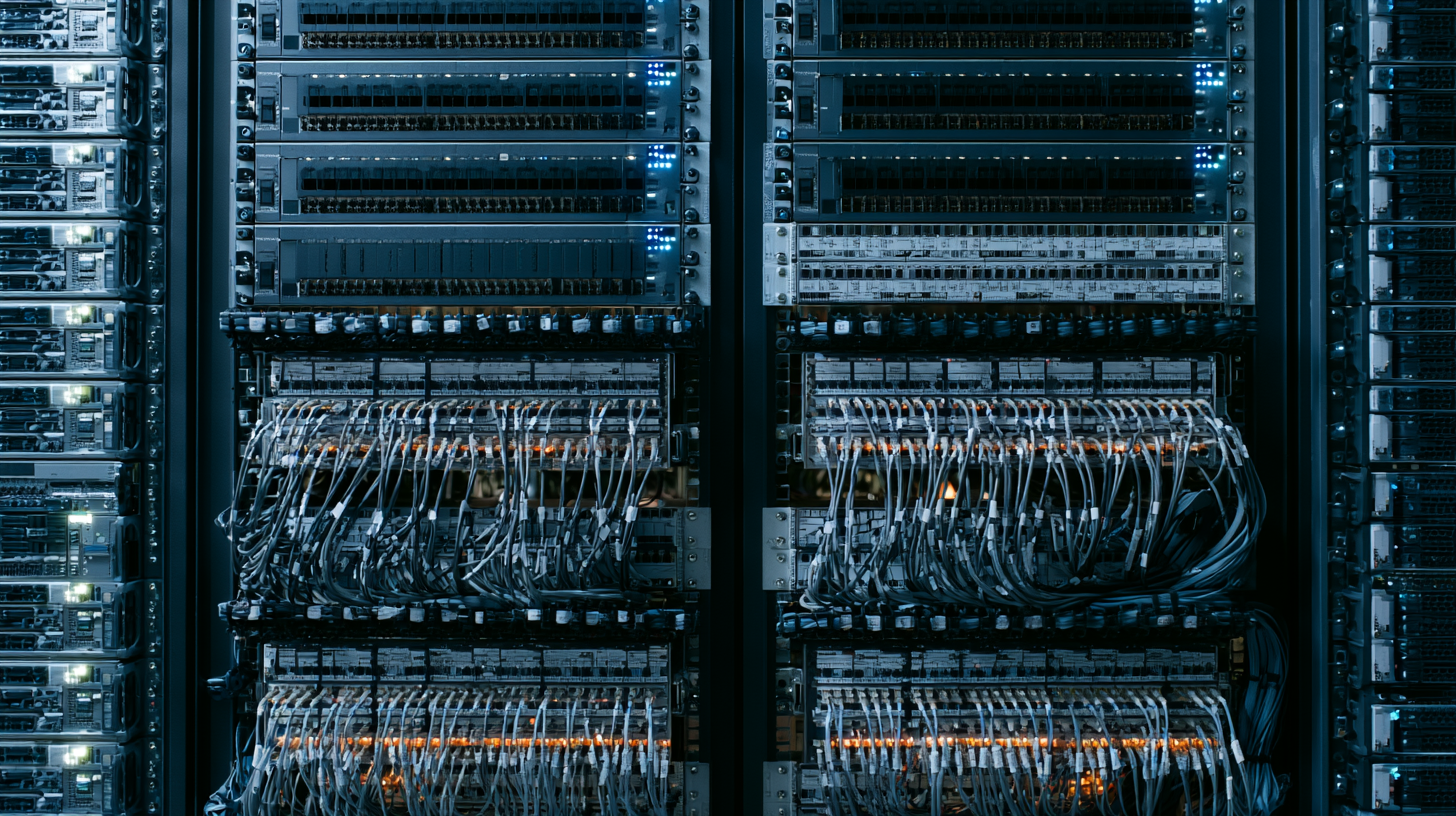
Infinite Compute was built around the parts of AI infrastructure that demand certainty: power, facilities, compute hardware, and operations. The company owns and develops infrastructure across Canada and the United States. Its committed power pipeline exceeds multiple gigawatts across North America, giving enterprise AI programs a path to capacity in a market where data center availability is severely constrained.
That constraint is already visible. North American primary data center markets have reached a record-low 1.4% vacancy rate, while wholesale colocation asking rates reached $196 per kW per month in 2025, up 6.6% year over year. Enterprises building agentic AI should plan for power, cooling, and rack density constraints before production demand arrives.
Infinite Compute addresses that constraint through vertical integration and modular deployment. Rowtie modular systems can deploy in 8 to 12 weeks, compared with 18 to 24 months for traditional data center construction. That speed matters for agentic AI roadmaps because infrastructure decisions made today determine whether production systems have capacity next quarter or wait behind facility constraints.
The compute and operations layer is designed for enterprise AI workloads that require dedicated environments:
The enterprise brings the workload and business requirements. Infinite Compute operates the infrastructure foundation. This same production-grade discipline is core to Infinite Compute's broader infrastructure model, and connects directly to the economics of running any production AI workload at scale. See AI Inference Economics for Enterprise.
Data sovereignty is another core requirement for enterprise agent systems. Agents often access proprietary documents, customer records, operational data, and regulated workflows. Infinite Compute operates Canadian and US infrastructure, anchored in renewable energy sources across both countries, supporting the evidence base enterprises require when evaluating infrastructure providers for regulated workloads.
Agentic AI raises the standard for enterprise infrastructure. Production systems need more than simple GPU availability. They need persistent state, memory headroom, fast KV cache management, low-latency network fabric, secure data locality, and operations teams accountable for the physical and logical stack.
Enterprises that treat agentic AI like ordinary inference will discover the gap in production. Sessions will run longer than expected. KV cache will consume more memory than planned. Tool latency will compound. Shared environments will introduce variability. Orchestration will become a platform burden instead of an application detail.
The right infrastructure decision gives AI leaders room to scale agent systems without rebuilding the foundation after the first production deployment. Dedicated managed infrastructure provides that base. It aligns compute, memory, power, cooling, networking, and operations around the way agentic workloads actually behave.
For enterprise AI leaders, the decision is direct: agentic AI will become part of the operating fabric of the business, and that fabric needs infrastructure built for persistence, state, and scale from the beginning. Talk to our team about the infrastructure your agentic AI systems need to run reliably in production.
Disclaimer: InfiniBand is a trademark of NVIDIA Corporation.
New
New
New

.svg)


