Confidential AI Infrastructure: GPU Attestation, Hardware Trust, and the Future of Regulated Workloads
Read More
09 Oct 2026

Enterprise AI infrastructure procurement carries a different risk profile than traditional IT sourcing. A conventional RFP can evaluate software functionality, support coverage, license terms, and cloud consumption models. AI infrastructure requires a deeper standard because the constraints sit below the application layer. Power, cooling, hardware allocation, network fabric, data residency, and operational accountability determine whether the AI roadmap can move from pilot to production.
That distinction matters because many enterprise AI programs are already constrained by infrastructure. According to industry data, 81% of enterprise AI projects stall due to infrastructure gaps rather than model quality. At the same time, primary North American data center markets have reached record-low vacancy of 1.4%, while Blackwell hardware waitlists can extend to 12 months for direct procurement. These conditions turn the enterprise AI infrastructure RFP into a strategic sourcing exercise. The procurement team has to evaluate capacity, control, and operational maturity before legal terms can carry meaning.

A strong enterprise AI infrastructure RFP should test whether the vendor can deliver and operate the full stack over a multi-year term. The questions that follow are designed for enterprise buyers, IT sourcing directors, and procurement teams evaluating infrastructure partners for production workloads.
AI infrastructure begins with power. GPU supply matters, but high-density AI clusters cannot run without secured electrical capacity, grid access, and cooling systems designed around that load. Procurement teams should start by asking, “Does the vendor control sufficient committed power for the full deployment term, including expansion capacity?” A strong answer identifies committed capacity, site-level availability, and how expansion will be reserved. A weak answer describes future utility conversations, general market access, or power that depends on another landlord’s allocation.
The second power question should examine source and sustainability: 'Where does that power come from, and what is the renewable mix behind the sites being proposed?' This question has become important for both operational and board-level reasons. AI workloads create visible energy demand, and enterprises with sustainability commitments need evidence behind claims. A strong answer connects specific sites to specific power sources. Infinite Compute's Canadian footprint gives procurement teams clear reference points, with renewable energy anchoring its infrastructure across sites.
The third power question should remove ambiguity from the deployment schedule: “What grid, interconnection, or utility approval dependencies remain after contract signature?” Strong vendors can separate secured capacity from aspirational capacity. They can explain what is available now, what is committed, and what depends on external approvals. Weak answers rely on optimistic timelines, broad regional power availability, or assumptions that utility queues will clear on schedule.
Infinite Compute's model maps directly to this category because the company owns and controls power, facilities, and compute hardware across North America. Its committed power pipeline exceeds 2.5 GW across Canada and the United States. For procurement teams, that vertical integration changes the nature of the diligence. The discussion moves from whether the vendor can find power to how reserved capacity will be allocated, deployed, and governed.
Traditional enterprise data centers were designed around lower-density IT loads. AI infrastructure has different thermal and electrical requirements. Legacy facilities often support 10 to 20 kW per rack, while modern AI deployments can require 130+ kW per rack. That shift changes the facility evaluation. Procurement should ask, “Can the proposed facility support AI rack densities above 130 kW per rack without derating the hardware?” A strong answer includes rack density, power distribution, cooling design, and how the facility handles sustained load. A weak answer offers generic high-density language without proving that the proposed hall can support the deployment profile.
The next facility question should focus on thermal architecture: “What cooling architecture is deployed today, and how does it support current and planned GPU generations?” AI workloads produce concentrated heat. Facilities designed around air cooling alone may struggle with dense GPU clusters, particularly as power draw rises across new silicon generations. Strong answers describe liquid cooling readiness, heat rejection strategy, mechanical redundancy, and operational procedures. Weak answers treat cooling as a facility-level feature rather than a workload-level requirement.
The third facility question tests whether the timeline is grounded in reality: “What deployment timeline is supported by existing site readiness rather than future construction assumptions?” This question matters because traditional data center construction often runs 18 to 24 months, while enterprise AI timelines rarely have that much flexibility. Infinite Compute’s modular Rowtie deployment model is designed for 8 to 12 week deployment windows per module. That difference gives sourcing teams a concrete benchmark for evaluating whether a vendor’s schedule reflects actual infrastructure readiness.
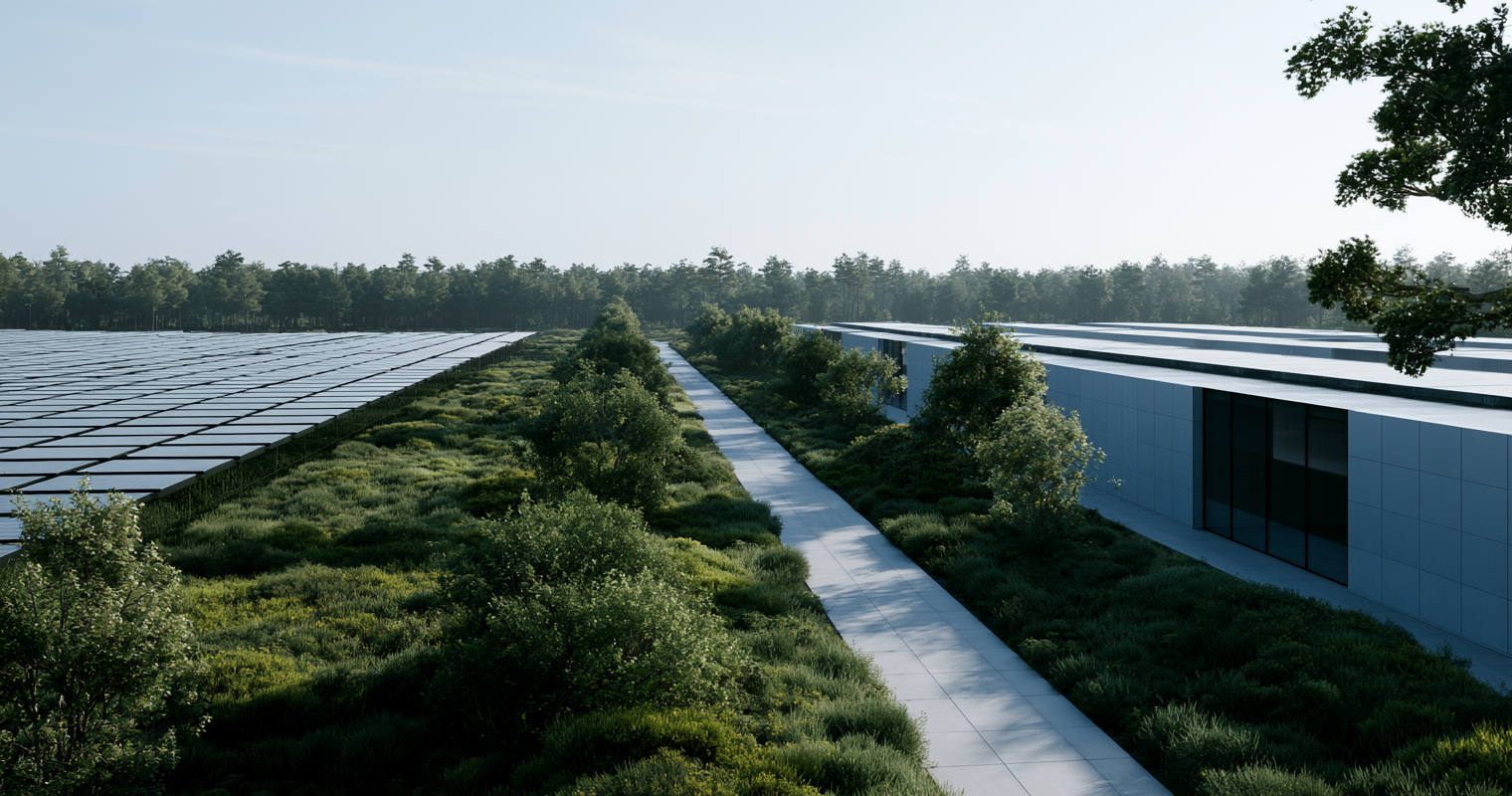
Strong facility answers show that the vendor understands AI infrastructure as an integrated physical system. Weak facility answers assume that available square footage equals deployable AI capacity. In a market where vacancy is scarce and high-density space is limited, procurement teams should treat facility readiness as a first-order evaluation criterion. For a deeper technical breakdown of what high-density facility requirements actually involve, see Designing for Blackwell and Beyond: Technical Requirements for High-Density GPU Colocation.
AI compute procurement often starts with GPU availability, but production deployments depend on cluster architecture. A collection of accelerators requires the right cluster architecture, networking, and operating model before it becomes a production AI platform. Procurement should ask, “What specific GPU generations, cluster sizes, and network fabrics can be committed under the RFP?” Strong answers identify the hardware generation, allocation process, cluster topology, and network fabric. Weak answers focus on logos, general hardware access, or unspecified future availability.
The second compute question should address supply chain risk: “How is hardware allocation secured against manufacturer lead times and competing enterprise demand?” Direct procurement for advanced GPUs can face 12-month waitlists, and enterprises often compete with larger buyers for access. Strong vendors can explain their allocation channels and partner status. Infinite Compute is NVIDIA Partner Network certified, which supports priority hardware allocation and gives procurement teams a stronger basis for evaluating deliverability.
The third compute question should test workload readiness: “How does the platform support bare metal isolation, InfiniBand-class networking, and storage throughput for training, fine-tuning, and inference?” Enterprise workloads vary. Some need tightly coupled clusters for training. Others need dedicated inference environments with predictable throughput. Strong answers describe bare metal architecture, InfiniBand NDR connectivity, storage design, and cluster scale. Infinite Compute supports bare metal clusters from 8 to 10,000+ GPUs with InfiniBand NDR connectivity, which gives buyers a clear range for both initial deployment and long-term expansion.
Weak compute answers reduce the discussion to instance types or nominal GPU count. That creates risk because cluster performance depends on the full system. Network congestion, storage bottlenecks, noisy-neighbor exposure, and limited isolation can all undermine production AI performance even when the hardware specification appears strong on paper.
Enterprise AI infrastructure requires ongoing operation. Hardware fails. Capacity needs change. Models grow. Workload patterns shift. The RFP should therefore move beyond provisioning and ask, “Who operates the cluster after deployment, and where does accountability sit when performance, capacity, or hardware issues arise?” A strong answer defines the operating model, escalation paths, responsibilities, and governance structure. A weak answer gives the buyer access to infrastructure while leaving operational ownership fragmented across internal teams and third-party support channels.
The second operations question should look across the full contract term: “How are capacity planning, hardware lifecycle management, monitoring, incident response, and change control handled over the contract term?” This question separates vendors that deliver infrastructure from partners that manage it. Strong answers include capacity reviews, hardware refresh planning, monitoring practices, incident procedures, and change management. Weak answers treat operations as support tickets rather than an enterprise service model.
Infinite Compute’s model is built around managed infrastructure relationships. Enterprise customers scope deployments with the company, and Infinite Compute manages the infrastructure stack from power through GPU operation. That approach matters for procurement because the contract can align technical delivery, operations, and accountability under one partner. For enterprise AI vendor evaluation, this is often the difference between capacity access and production readiness.
A strong operations response should also show how the vendor handles growth. AI platforms rarely remain static. A deployment that begins with fine-tuning or internal inference can expand into larger training, multimodal workloads, or business-critical inference. Procurement teams should evaluate whether the vendor can manage that evolution without forcing a new sourcing cycle every time demand changes.
Compliance cannot sit outside the infrastructure discussion. For regulated industries, jurisdictional control and data residency shape vendor eligibility from the beginning. Procurement should ask, “Can the vendor provide contractual data residency for training data, model weights, logs, and inference inputs?” Strong answers define the data categories covered, the jurisdictions involved, and the technical controls that enforce residency. Weak answers rely on policy statements, broad cloud-region language, or unclear subcontractor arrangements.
The next compliance question should test independent validation: “Which compliance frameworks are independently validated, and how do those controls apply to the proposed deployment architecture?” Strong vendors can map certifications and controls to the actual environment being procured. Infinite Compute supports SOC 2 Type II compliance, which gives regulated buyers a foundation for security and procurement review. Canadian buyers also need to consider PIPEDA and domestic data handling obligations, particularly in financial services, healthcare, public sector, and government-adjacent environments.
Canada’s sovereign AI context raises the stakes. The federal government has committed CAD $2.4B toward sovereign AI infrastructure, and large-scale Canadian AI data center intake requirements emphasize sovereignty factors such as Canadian ownership, Canadian data residency, and Canadian vendors. These policy signals reflect a practical enterprise concern. Sensitive data, proprietary model weights, and inference inputs need infrastructure that aligns with legal and operational requirements.
Weak compliance answers appear polished but fail under architecture review. They promise residency without explaining storage, logging, support access, backup location, or administrative control. Strong answers make compliance measurable, contractual, and enforceable.
Commercial terms for AI infrastructure should reflect the long-lived nature of the deployment. Standard cloud or colocation language may miss the realities of reserved power, hardware allocation, cooling capacity, expansion rights, and data movement. Procurement should ask, “What commitments govern capacity reservation, expansion rights, energy exposure, egress, and hardware refresh over the life of the agreement?” Strong answers define what the buyer controls, what is reserved, what can expand, and how refresh cycles will be handled. Weak answers defer key terms until after award or bury them in change orders.
The final question should protect the enterprise from execution risk: “How does the contract protect the buyer from stranded capacity, delayed deployment, or scope changes driven by infrastructure dependencies?” Strong answers connect delivery milestones, operational obligations, and commercial remedies to the physical deployment plan. Weak answers separate commercial commitments from site readiness, power availability, or hardware allocation.
This category also needs market awareness. Wholesale colocation asking rates in North America reached approximately $196 per kW per month in 2025, up 6.6% year over year, while large AI deployments command custom treatment due to density, cooling, and power constraints. Procurement teams should therefore focus on cost predictability, capacity control, and contract durability rather than simple rate comparison. Infinite Compute’s zero egress fees on its cloud platform can also matter for AI workloads where data movement is substantial, provided the broader contract aligns with workload and governance requirements.
Commercial discipline should extend to renewal terms, expansion windows, migration support, and exit planning. AI infrastructure is difficult to move once integrated with data pipelines, model operations, and business workflows. The RFP should force clarity before commitment, while the buyer still has leverage to define the operating model.
The checklist points to a simple procurement principle: the strongest AI infrastructure vendors control more of the stack. Infinite Compute is vertically integrated across power, facilities, and compute hardware, with operations in Canada and the United States. That structure gives enterprise buyers a single partner for the infrastructure layers that most often delay AI programs.
On power, Infinite Compute has a 2.5+ GW committed pipeline across North America, with renewable energy advantages across its Canadian sites. On facilities, the company designs for AI densities above 130 kW per rack and targets PUE below 1.2. On deployment, modular Rowtie infrastructure supports 8 to 12 week deployment windows per module, compared with traditional data center construction cycles that can run 18 to 24 months. On compute, Infinite Compute supports bare metal clusters from 8 to 10,000+ GPUs, connected with InfiniBand NDR. On compliance, the platform supports SOC 2 Type II and contractual data residency across Canadian and US environments.
For sourcing teams, these facts make the RFP process more concrete. Instead of evaluating infrastructure through generic claims, procurement can test every answer against power control, facility readiness, hardware access, operational accountability, compliance evidence, and commercial alignment. This full-stack accountability is central to Infinite Compute's broader infrastructure model.
An enterprise AI infrastructure RFP should determine whether the organization can execute its AI roadmap under real-world constraints. The winning answer is the one that proves capacity, governs risk, supports compliance, and gives the business room to scale.
AI infrastructure now sits on the same strategic plane as data, security, and core systems. Procurement teams that treat it with that level of discipline will avoid fragile deployments and build a stronger foundation for production AI. The right RFP rewards the partner with the power, facilities, compute, and operating model to carry the enterprise through the next phase of AI. Talk to our team about building an RFP that actually tests infrastructure readiness.
New
New
New

.svg)


