Confidential AI Infrastructure: GPU Attestation, Hardware Trust, and the Future of Regulated Workloads
Read More
09 Oct 2026
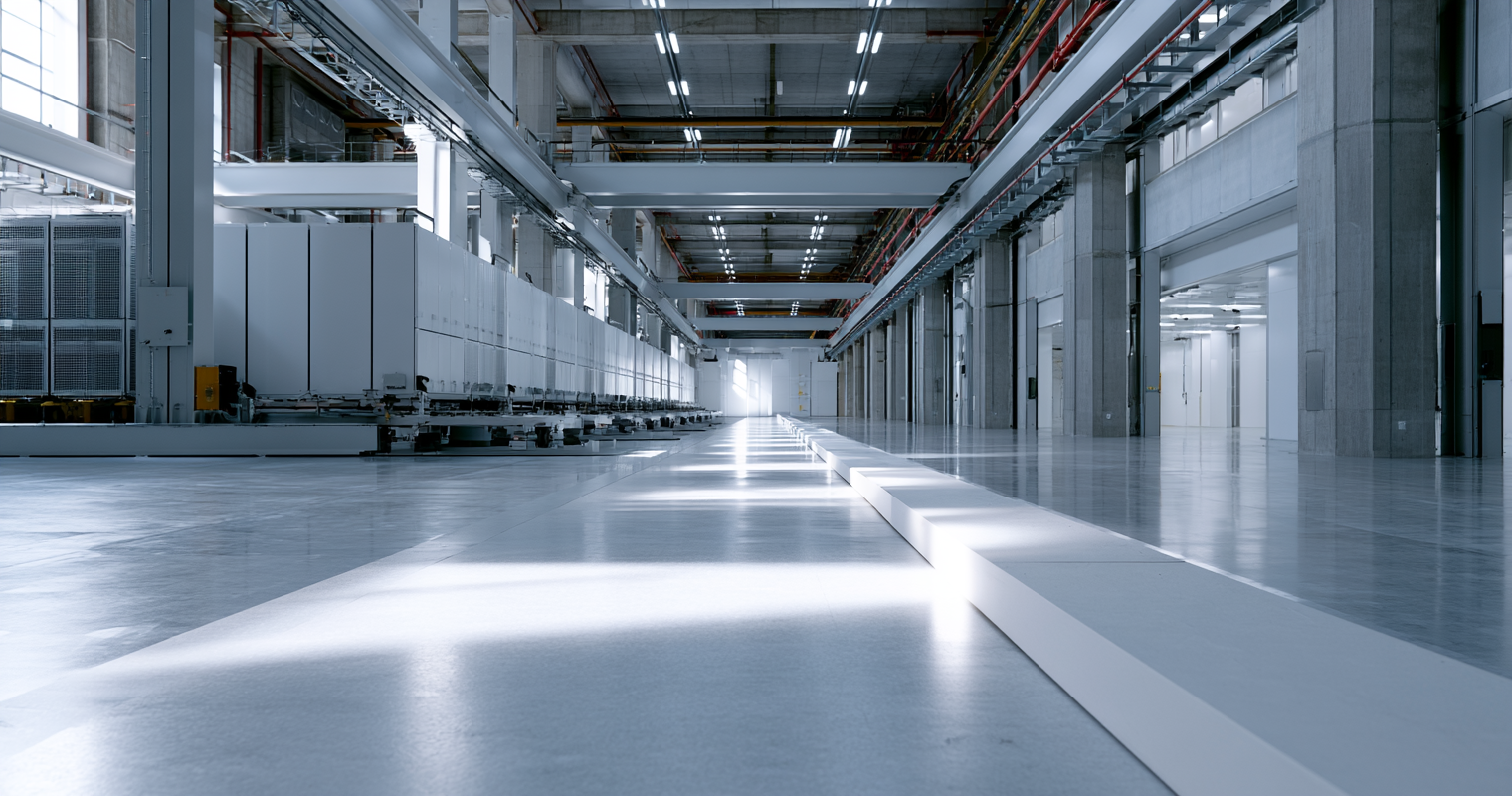
Blackwell-class infrastructure changes the colocation discussion at the facility layer. The question is no longer whether a data center can accept GPU servers. The question is whether the electrical, mechanical, network, and operational systems were designed around sustained AI density from the beginning.
The shift started with dense H100 clusters. The pattern that began with dense H100 deployments has become stricter with Blackwell. Each new GPU generation concentrates more compute, more memory bandwidth, and more heat into the same physical footprint. That density changes failure domains, power distribution assumptions, thermal design, and maintenance practices.
A traditional colocation environment was built around mixed enterprise IT. Those loads were comparatively even, predictable, and low density. AI clusters behave differently. They draw large amounts of power in tightly packed zones. They create concentrated thermal loads. They depend on high-bandwidth east-west traffic across tightly coupled GPU fabrics. They also need physical layouts that support cabling, cooling manifolds, service clearance, and rapid component replacement without disturbing adjacent workloads.
Blackwell makes these requirements explicit. A facility that can host a few GPU nodes does not automatically qualify for high density GPU colocation. A facility that can cool one dense cabinet as an exception does not automatically qualify for a production cluster. Engineering directors need to evaluate whether the facility can run dense AI workloads continuously, expand them predictably, and support them operationally over the full hardware lifecycle.
A 130 kW rack is not a marketing specification. It is an electrical and thermal event that must be engineered into the facility.
At 130 kW, a single rack consumes the power of a small row of legacy enterprise cabinets. At 415V three-phase power, that load approaches 181 amps before derating, redundancy design, and power factor considerations. At lower voltage, the current rises sharply, which increases conductor size, breaker complexity, heat loss, and distribution constraints. The upstream design must account for transformers, switchgear, busway, PDUs, UPS capacity, breaker coordination, grounding, harmonics, and fast load changes from accelerated compute workloads.
This density also changes how redundancy is planned. Power paths must support actual AI load profiles, not nameplate assumptions copied from general enterprise deployments. Failover behavior matters because transferring a dense GPU rack between power paths can create abrupt loading on upstream systems. A colocation provider must understand how the cluster behaves under training, fine-tuning, and inference loads, then design capacity and protection schemes around those realities.
The thermal load is equally direct. Nearly every watt consumed by the rack becomes heat that must be removed. A 130 kW rack produces more than 443,000 BTU per hour. Removing that heat through air alone requires an impractical volume of controlled airflow, especially when the heat is concentrated in a compact footprint. Even with aggressive aisle containment and high delta T assumptions, the airflow requirements strain fan power, floor plenum capacity, coil performance, humidity control, and serviceability.
At this density, liquid cooling becomes an operational necessity rather than a premium feature. Direct-to-chip liquid cooling removes heat closer to the source, reduces dependence on extreme airflow, and allows the facility to maintain stable thermal conditions across dense GPU rows. The facility must support coolant distribution units, secondary fluid loops, manifolds, leak detection, isolation valves, water quality management, pressure control, and maintenance procedures designed for live AI environments.

A liquid cooled AI colocation facility also needs strong integration between mechanical and electrical design. Cooling failure at 130 kW per rack becomes a fast-moving operational condition. The response window is shorter than in a legacy room filled with low-density cabinets. Sensors, controls, alarms, and operating procedures must be designed around dense heat rejection, not conventional comfort cooling.
Most legacy data centers were built for 10 to 20 kW per rack, often less. Their architecture assumed broad distribution of moderate loads across a white space. That assumption breaks down when GPU clusters concentrate megawatts into a smaller footprint.
The first constraint is power delivery. A legacy facility may have total building capacity on paper, yet lack the ability to deliver high-density power to specific rows. Power may be stranded in the wrong part of the building. Floor PDUs may be undersized. Busway may lack capacity. Switchgear may not support the load profile. Utility interconnects may be fully allocated. These issues cannot be solved by placing a dense rack in an open cage.
The second constraint is heat removal. Perimeter CRAC or CRAH units, raised floors, and traditional hot aisle containment were never designed for Blackwell-class rack densities. Retrofitting liquid cooling into a legacy facility can help specific deployments, but retrofits often encounter limits in chilled water capacity, piping routes, leak containment, service access, floor loading, and control integration. A facility designed for air-cooled enterprise workloads remains constrained by its original mechanical assumptions.
The third constraint is physical and operational layout. AI clusters require dense power whips, liquid lines, high-count network cabling, heavy hardware, and repeatable service procedures. The facility must support staging, burn-in, spares handling, secure access, and coordinated maintenance. GPU infrastructure is expensive, heavy, and thermally sensitive. Moving it into a room that was optimized for standard server cabinets creates risk before the cluster is even powered on.
The fourth constraint is network architecture. AI workloads depend on low-latency, high-throughput cluster fabrics. InfiniBand and other high-performance interconnects impose cabling, topology, and distance considerations that influence rack placement. Colocation design must account for fabric adjacency, cable management, airflow or liquid manifold conflicts, and future expansion. A general-purpose facility can provide cross-connects. High density GPU colocation needs a layout that preserves cluster performance.
These constraints explain why enterprise AI projects often stall after hardware decisions are made. The problem is not only GPU availability. The harder issue is finding infrastructure that can host the hardware safely, densely, and predictably.
Technical buyers should begin with power. Cabinet availability means little without secured upstream capacity, clear density commitments, and an electrical design that can deliver sustained load to the deployment area. The provider should be able to explain utility capacity, substation strategy, distribution architecture, redundancy model, and expansion path in concrete terms.
Cooling should be evaluated with the same discipline. A provider should demonstrate how liquid cooling is integrated into the facility, not added as an afterthought. Engineering teams should examine CDU architecture, loop temperatures, fluid management, leak detection, maintenance isolation, monitoring, and the relationship between IT load and heat rejection. A useful answer will include operating ranges and failure procedures, not broad assurances that the facility is AI-ready.
The physical environment matters as much as the mechanical plant. Floor loading, rack anchoring, cable pathways, staging space, loading access, secure storage, and maintenance clearance all affect deployment success. GPU clusters demand a different logistics and commissioning model than standard server refreshes.
Network design should be reviewed before rack layouts are finalized. The provider should understand cluster fabrics, high-bandwidth east-west traffic, and the placement discipline needed for large GPU pods. Network topology, cross-connect design, fiber routing, and meet-me access all influence the operational quality of the deployment.
Compliance and data residency also belong in the technical review. Enterprises in financial services, healthcare, government-adjacent sectors, and other regulated industries often need contractual data residency guarantees and audited controls. SOC 2 Type II alignment provides a stronger foundation for enterprise procurement than informal operational claims.
For a procurement-focused checklist covering power, cooling, and contractual protections, see Enterprise AI Infrastructure RFP Checklist: 15 Questions to Ask Before You Sign.
Deployment speed should be tested against real construction dependencies. Traditional data center builds can take 18 to 24 months. Modular delivery can compress that timeline when power, land, facility design, and supply chain are coordinated in advance. For teams that already own hardware or have committed capital to GPU systems, the difference between months and years changes the AI roadmap.

Infinite Compute’s colocation model is built around owned power, purpose-built facilities, and high-density AI infrastructure. That foundation matters because Blackwell-class deployments are constrained by power and cooling before they are constrained by floor space.
Infinite Compute controls a 2.5+ GW committed power pipeline across North America, with facilities and development sites across Canada and the United States. This gives enterprise buyers a path to capacity grounded in physical infrastructure rather than available cabinet count. Its Canadian deployments are anchored in renewable energy sourcing. Those attributes matter for enterprises that must align AI growth with energy sourcing, data residency, and long-term infrastructure planning.
The facility design supports 130+ kW per rack for AI workloads. That density requires liquid cooling, high-capacity electrical distribution, and operating procedures built around dense GPU clusters. Infinite Compute approaches liquid cooled AI colocation as a baseline design requirement for modern accelerators. The goal is to support sustained Blackwell-class deployments without forcing enterprise hardware into rooms designed for older thermal profiles.
Efficiency is also part of the engineering model. Infinite Compute targets a PUE below 1.2, reflecting the need to reduce overhead power as rack density rises. At AI scale, inefficient mechanical design compounds quickly. Every avoidable watt used outside the IT load increases operating complexity and reduces the useful capacity of the site.
Rowtie Modular Systems provide a deployment speed proof point. Rowtie enables modular deployment in 8 to 12 weeks, compared with 18 to 24 months for traditional construction. That speed comes from designing repeatable infrastructure blocks around high-density power and cooling requirements. For technical buyers, speed alone is not the measure. Modular delivery must preserve engineering discipline while reducing time to operational capacity.
Infinite Compute’s model also supports enterprise operational requirements beyond the white space. The company provides managed infrastructure services, compliance alignment, and deployment support for organizations that need production AI capacity without building and operating a facility themselves. For teams bringing their own hardware, the value is a hosting environment designed for the power, cooling, security, and operational realities of modern GPU systems. This facility-first approach is part of Infinite Compute's broader infrastructure model, where density, power, and cooling are engineered together rather than retrofitted.
Engineering directors should treat GPU colocation as part of the system architecture. The facility will influence cluster density, thermal stability, expansion timing, maintenance procedures, data residency, and long-term hardware options. A weak facility choice can turn expensive accelerators into constrained assets. A strong facility choice gives the AI platform room to scale.
Blackwell makes that decision more consequential. Power delivery, liquid cooling, and physical operations now determine whether a deployment can run at intended density. Legacy assumptions no longer hold. The right colocation partner must prove capacity at the rack, row, and site level.
For technical buyers who already own GPU hardware, the next decision is where that hardware can operate without compromise. Choose the facility that was designed for the load you are about to place in it. Talk to our team about deploying Blackwell-class infrastructure without the retrofit risk.
New
New
New

.svg)


