Confidential AI Infrastructure: GPU Attestation, Hardware Trust, and the Future of Regulated Workloads
Read More
09 Oct 2026
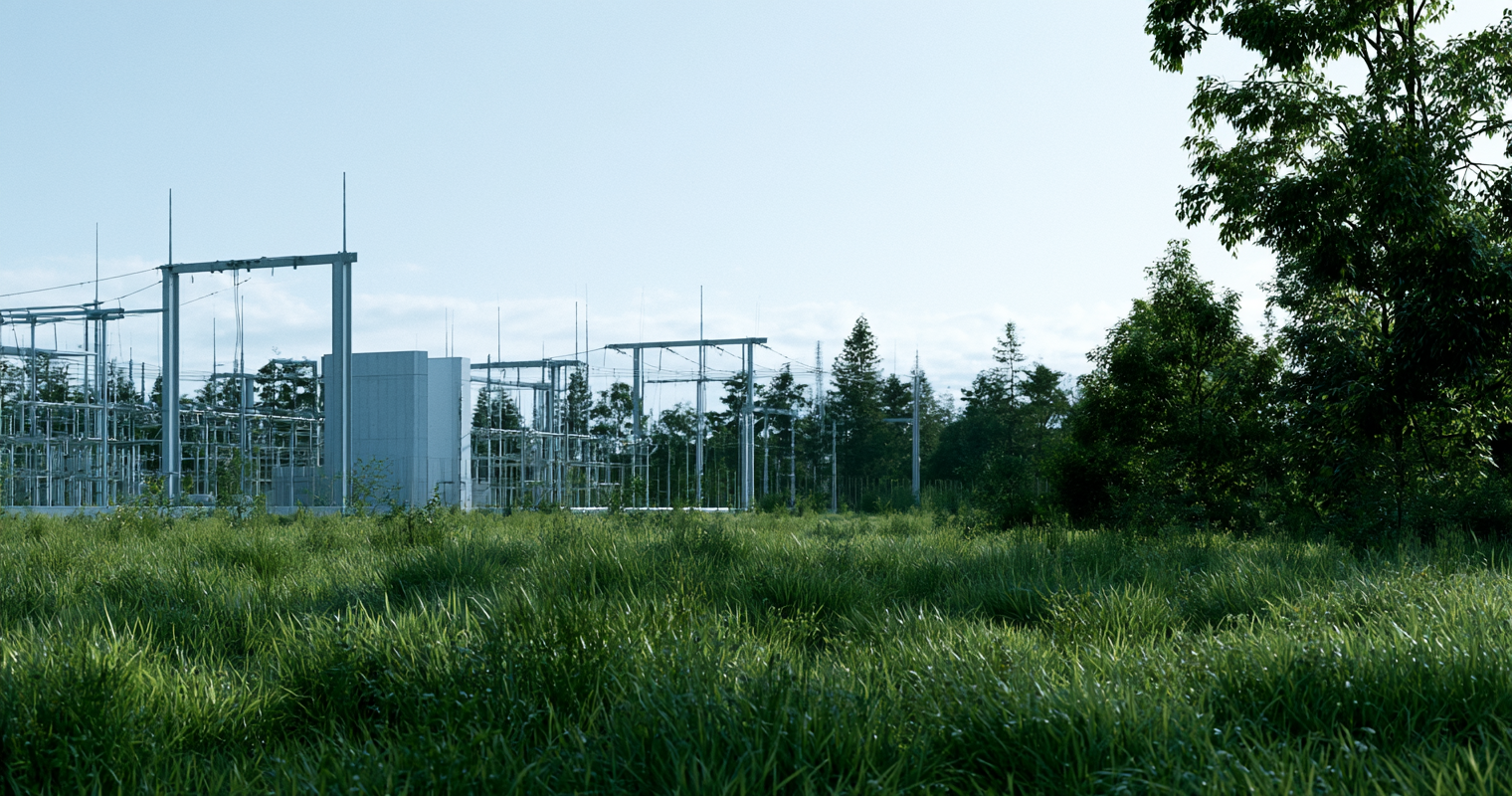
Enterprise AI has moved faster than the infrastructure built to support it. The gap shows up in delayed deployments, constrained cluster access, rising colocation rates, and board-level concern over whether AI plans can be supported in production.
The AI data center supply demand gap is now structural. Demand is growing through model training, fine-tuning, retrieval systems, agentic workflows, and high-volume inference. Supply depends on land, power, cooling, substations, transformers, permits, and hardware allocation. Those inputs do not move at software speed.
Primary North American data center markets have reached a record-low 1.4% vacancy rate. Wholesale colocation asking rates in North America reached roughly $196 per kW per month in 2025, up 6.6% year over year. These figures are market signals. They show that usable capacity has become scarce before many enterprises have fully scaled their AI programs.
The constraint is already affecting execution. A reported 81% of enterprise AI projects stall because of infrastructure gaps rather than model quality. That number should change how CTOs, CIOs, VPs of Infrastructure, and procurement leaders think about AI planning. The model roadmap and the infrastructure roadmap now belong in the same conversation.
AI infrastructure is physical infrastructure. Every megawatt has to be secured, engineered, interconnected, cooled, and operated. At gigawatt scale, the timeline is measured in years.
AI power capacity planning begins with land assembly. The right site needs grid proximity, expansion room, environmental feasibility, fiber access, physical security, and a jurisdiction that can support long-term industrial load. Suitable sites are limited. Once the market understands their value, they become harder to assemble and more expensive to secure.
Power follows a longer path. Utilities need to evaluate load requests, transmission capacity, substation requirements, interconnection work, and grid reliability. Large projects require sustained relationships with power authorities and local stakeholders. Permitting adds another layer. Environmental review, municipal coordination, construction approvals, and community impact all shape the schedule.
AI density raises the bar further. Legacy facilities were commonly designed around 10 to 20 kW per rack. AI-optimized infrastructure now needs to support densities above 130 kW per rack. That difference changes electrical design, cooling architecture, floor loading, redundancy planning, and operations. Modern AI clusters require major redesign of a conventional data center shell to operate at production density.
Cooling has become a first-order capacity issue. High-density GPU clusters need liquid cooling and facility designs capable of moving heat reliably at scale. Efficiency also matters because every watt consumed by overhead reduces the power available for compute. Purpose-built AI facilities target PUE below 1.2, reflecting the operational discipline required when power is the core input.
Hardware adds another constraint. Direct procurement of advanced GPU systems can involve waitlists of up to 12 months, especially for Blackwell-class infrastructure. Even when the hardware arrives, it needs a facility that can power, cool, connect, secure, and operate it. Hardware without available data center capacity does not create enterprise AI capability.
Companies that secured AI infrastructure before the boom hold a structural advantage because every early decision compounds. Land secured early avoids later scarcity. Power relationships established early move ahead of crowded queues. Facility designs made for AI from the start avoid retrofit limitations. Operational teams that build and run dense clusters gain experience before demand peaks.

This advantage becomes more visible as the market tightens. Late entrants face competition for sites, interconnection timelines, transformer availability, construction labor, and utility attention. They also face a market where hyperscale demand has already absorbed much of the visible capacity pipeline. The result is a widening gap between announced capacity and usable capacity.
For enterprise buyers, this distinction matters. A provider can talk about future capacity. A provider with secured power, controlled sites, modular deployment capability, and operating discipline can convert planning into delivered infrastructure. The difference becomes critical when AI systems move from experimentation to production dependency.
Enterprise AI infrastructure strategy has to account for this timing risk. A procurement cycle that waits until demand is urgent will encounter a market where the best capacity has already been committed. The organizations that align with credible infrastructure partners earlier gain access to planning options that disappear later.
Infinite Compute's early positioning reflects strategic foresight around the inputs that now define North American AI infrastructure: power, land, renewable energy, and sovereignty.
Across North America, Infinite Compute has a committed power pipeline of more than 2.5 GW. That scale matters because AI deployments are no longer isolated rack decisions. They are multi-year capacity commitments tied to model roadmaps, data growth, inference volumes, and business-critical workloads.
Its Canadian sites provide a foundation built on some of Canada's strongest renewable power profiles, anchored in hydro and wind resources. For enterprises with sustainability mandates, that creates a direct link between AI infrastructure growth and cleaner energy sourcing. For infrastructure planners, it also provides a stable jurisdiction with the power characteristics required for long-term AI workloads, combining large-scale renewable power, site control, and room for purpose-built expansion. As AI demand grows, locations with both energy scale and development flexibility become increasingly valuable.
Canada's sovereign AI context strengthens the relevance of these assets. The Canadian federal government has committed CAD $2.4B toward sovereign AI infrastructure. For regulated enterprises in financial services, healthcare, government-adjacent sectors, and other sensitive industries, Canadian data residency can be a procurement requirement. Domestic infrastructure aligned with Canadian ownership, Canadian data residency, and Canadian compliance gives buyers a path to scale AI without routing sensitive workloads through foreign-controlled environments.
This position also supports faster deployment. Infinite Compute's modular Rowtie approach can support 8 to 12 week modular deployment timelines, compared with 18 to 24 months for traditional data center construction. Modular deployment still requires power, land, and permitting. It turns secured infrastructure foundations into deployable capacity faster once the strategic groundwork has been completed.

Vertical integration matters because fragmented infrastructure creates fragmented accountability. Enterprises need a partner that can coordinate the full stack from power to compute.
Infinite Compute owns its power assets, facilities, and compute hardware across Canada and the United States. That model gives enterprise buyers a clearer view of where capacity comes from, how it is controlled, and how it can scale over time.
The value of this model increases as the market becomes more constrained. When a provider depends on third-party facility access, utility negotiations, leased capacity, or external hardware timing, every dependency can become a schedule risk. When the provider controls more of the underlying stack, capacity planning becomes more direct and more credible. This vertically integrated approach is core to Infinite Compute's broader infrastructure model.
Complexity remains. AI infrastructure remains capital-intensive and operationally demanding. High-density clusters need resilient power design, advanced cooling, secure operations, high-performance networking, and lifecycle management. Infinite Compute supports bare metal clusters from 8 to more than 10,000 GPUs, connected with InfiniBand NDR, and operates within enterprise compliance requirements including SOC 2 Type II.
For large enterprises, those details shape confidence. AI workloads increasingly touch proprietary data, customer records, intellectual property, and regulated processes. Infrastructure decisions now carry risk across security, compliance, finance, operations, and strategy. The partner evaluation has to reflect that scope.
The next phase of AI procurement will reward buyers who ask harder infrastructure questions earlier. Capacity claims need to be tied to power control. Deployment timelines need to be tied to site readiness. Sustainability claims need to be tied to actual energy sources. Sovereignty claims need to be tied to physical infrastructure, legal jurisdiction, and contractual commitments.
For the physical requirements behind that power positioning, see The Gigawatt Pipeline: Why Power Access Determines AI Infrastructure Capacity.
Buyers should also distinguish between near-term access and long-term capacity planning. An enterprise can often find enough compute for experimentation. Production AI creates a different profile. Workloads become persistent. Data volumes grow. Inference demand expands across products and internal systems. Governance requirements become more formal. The cost of interruption rises.
That shift changes the role of procurement. The best enterprise AI infrastructure strategy treats capacity as a strategic resource rather than a commodity purchased at the last possible moment. Procurement teams that evaluate infrastructure partners only after workloads reach production scale will face fewer options, longer timelines, and less control over geography, energy profile, and architecture.
The market is already showing the consequences of delayed planning. Data center vacancy sits at record lows. Advanced hardware remains supply constrained. Utility interconnection queues are crowded. Traditional construction timelines do not match the pace of enterprise AI adoption. These conditions are unlikely to resolve quickly because the underlying constraints are physical.
The companies winning the AI capacity race made the difficult infrastructure decisions before the demand curve became obvious. They secured power, assembled land, built utility relationships, designed for high-density compute, and positioned facilities in jurisdictions that can support long-term AI growth.
That is the lesson for enterprise buyers. AI infrastructure decisions made today will determine what can be deployed in 12, 24, and 36 months. Waiting for certainty creates exposure because the market allocates capacity before every buyer feels ready.
Infinite Compute's early positioning gives enterprises a path into secured North American AI infrastructure with renewable power, sovereign Canadian options, and vertically integrated execution. In a constrained market, that combination has strategic value because it addresses the real bottleneck before it reaches the procurement desk.
The timing decision is now part of the infrastructure decision. Enterprises that plan early will shape their AI capacity. Enterprises that wait will inherit the capacity left behind. Talk to our team about securing your AI capacity before the market tightens further.
New
New
New

.svg)


